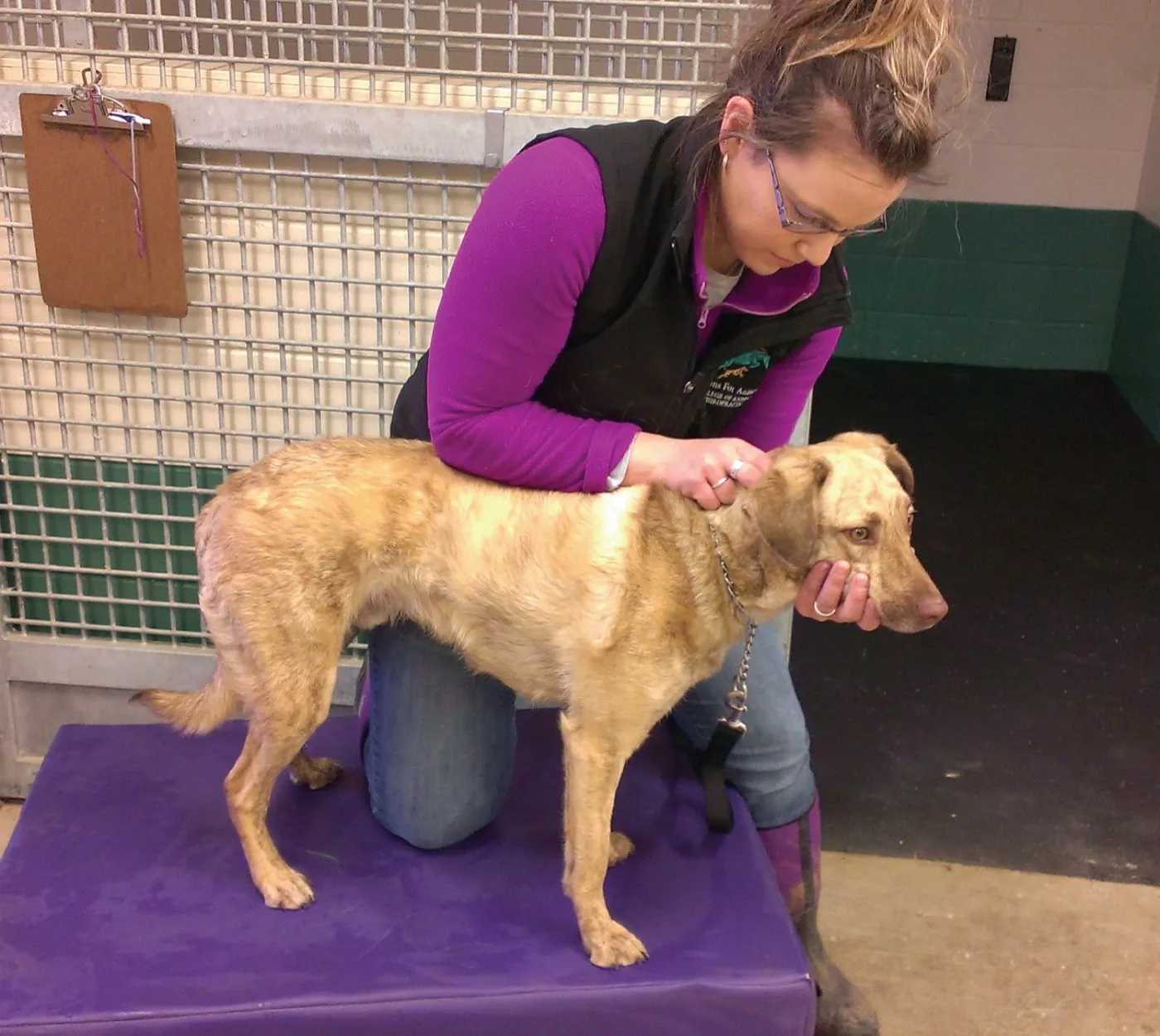
What is small animal chiropractic care?
Small animal chiropractic care is a gentle, hands-on therapy designed to support proper joint movement, mobility, and overall musculoskeletal health in dogs and cats. It may be beneficial for pets experiencing stiffness, reduced mobility, or certain musculoskeletal concerns. Dr. Jennifer Selvig evaluates each pet individually to determine whether chiropractic care may be a helpful addition to their overall treatment plan.

What to expect at your pet’s chiropractic visit
The first visit begins with your pet’s history and a hands-on exam from head to tail, checking for areas of pain, tension or reduced range of motion. We will also watch your pet walk to look for stiffness, uneven movement or lameness.
If chiropractic care is a good fit, gentle, targeted adjustments are made by hand to the spine and limbs. Afterward, we reassess how your pet is moving. Many pets start with a few visits close together, then space them out as they improve.

Could chiropractic care help your dog or cat?
Chiropractic care may be worth discussing if your pet:
- Seems stiff after rest or exercise
- Is slowing down on walks or hesitates on stairs and jumps
- Has arthritis or is recovering from an orthopedic injury or surgery
- Moves unevenly or carries their body differently than before
Chiropractic care is not right for every pet or every problem. Some conditions, such as disc disease or fractures, need other care first, which is why each pet is evaluated before any adjustment.
Help your pet move more comfortably
If your dog or cat seems stiff or less mobile than usual, call us at (952) 435-8387 to ask whether chiropractic care could be part of their plan.
Chiropractic - FAQ
What does chiropractic care involve for a dog or cat?
Animal chiropractic uses quick, low-force adjustments to joints between the vertebrae or in the limbs to help restore normal movement and range of motion. Adjustments are performed by hand or with a small handheld device, by a certified veterinarian or licensed chiropractor. It is most often used for stiffness and pain that develop after an injury. Source: University of Florida Small Animal Hospital
Which pets may benefit from chiropractic care?
Pets showing pain, stiffness or reduced mobility may benefit. Typical cases include older dogs that slow down on walks or struggle with stairs, active dogs that seem off or lame with exercise, pets recovering from orthopedic surgery, and seniors with arthritis. Chiropractic care is usually combined with other treatments rather than used alone. Source: University of Illinois College of Veterinary Medicine
How many chiropractic sessions will my pet need?
It depends on your pet’s condition and how they respond. A common approach is weekly visits for the first two to four weeks, then gradually spacing visits out to every two weeks, every four weeks and eventually every six to eight weeks. Chiropractic care often works alongside pain medication and rehabilitation exercises. Source: University of Illinois College of Veterinary Medicine
Is chiropractic care safe for every pet?
No. Adjustments are not appropriate for pets with weakened bones, cancer, disc disease or certain other conditions, and forceful techniques can cause injury. Gentle soft-tissue methods are often safest for older or fragile pets. Research on chiropractic care in animals is still limited, which is why a veterinary exam and diagnosis should come first. Source: Merck Veterinary Manual
My dog is limping. Should we start with chiropractic care?
Start with an exam. Limping is a sign of a problem, not a diagnosis, and it can come from joints, bones, muscles or nerves. Your veterinarian will watch your dog stand and walk, feel the legs and joints, and may recommend X-rays to find the cause. Once we know what is going on, we can decide whether chiropractic care fits. Source: Merck Veterinary Manual


