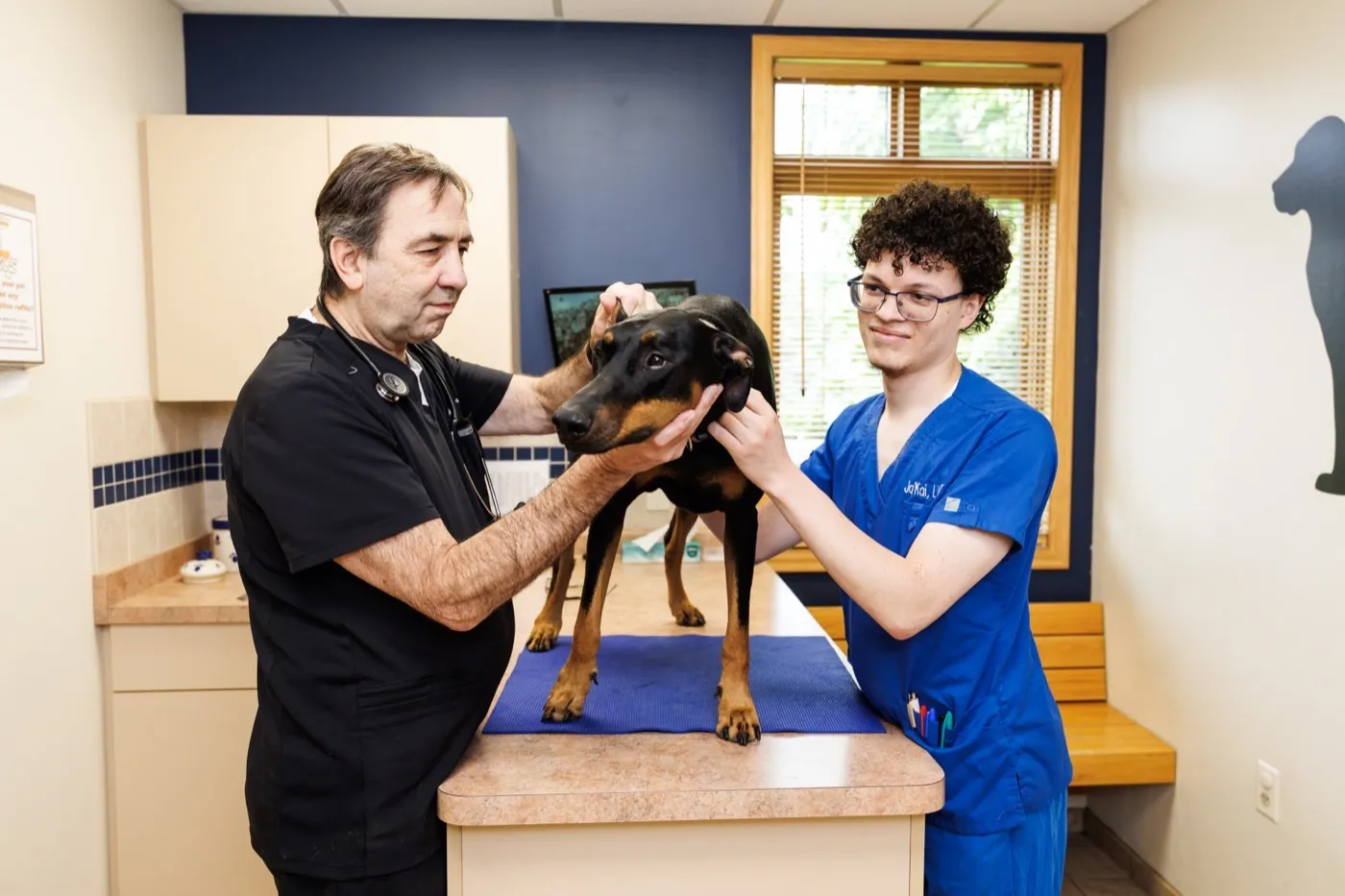
What is small animal dermatology?
Our small animal dermatology services focus on diagnosing and treating skin, ear, and allergy conditions in dogs and cats. From itchy skin, allergies, and recurrent ear infections to hair loss, skin infections, hot spots and other dermatologic concerns, our veterinary team takes the time to identify the underlying cause and develop a treatment plan tailored to your pet. Our goal is to help your pet feel more comfortable and improve their long-term skin and overall health.
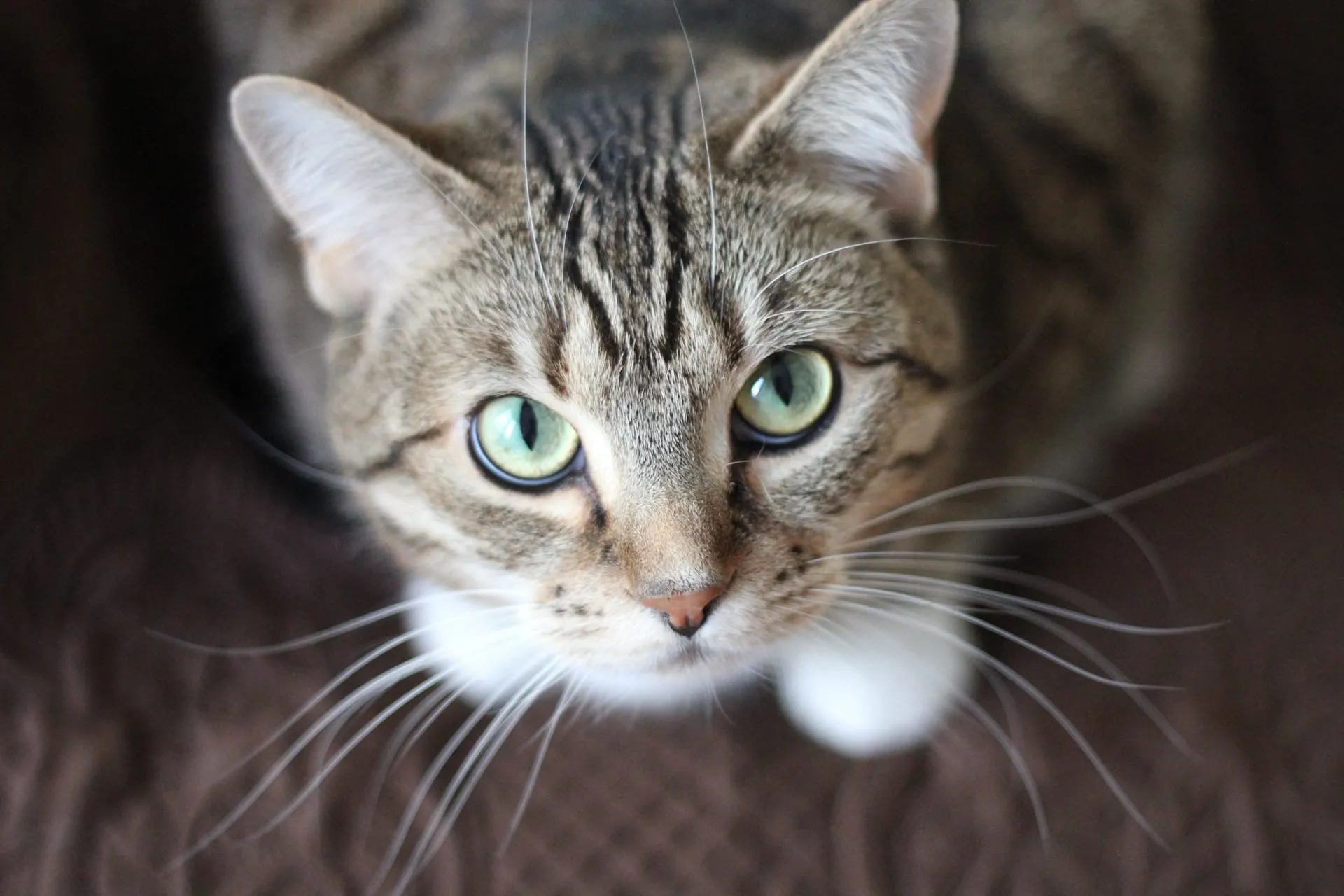
What to expect at your pet’s skin or ear appointment
We start with your pet’s history: when the problem began, whether it changes with the seasons, what your pet eats, which parasite prevention they use and what treatments you have tried. Then we examine the skin, coat and ears closely.
Depending on what we find, we may recommend tests such as skin scrapings, a look at skin or ear samples under the microscope, cultures or bloodwork. Many of these can be run in our in-house laboratory. Skin and allergy problems often take more than one visit to sort out, so recheck appointments are an important part of the plan.

When to bring your pet in for skin or ear problems
Itching and irritation can wear on your pet and often get worse without treatment. Call us if you notice:
- Constant scratching, licking or chewing, especially at the paws
- Head shaking, ear odor or discharge
- Hair loss, redness, scabs or bumps
- Hot spots or skin that looks moist and inflamed
- Infections that keep coming back
Finding and managing the underlying cause, rather than only treating each flare-up, gives your pet the best chance of lasting relief.
Get relief for your itchy pet
If your dog or cat is scratching, shaking their head or losing hair, we can help find out why. Call us at (952) 435-8387 to schedule an exam.
Dermatology - FAQ
Why does my dog keep getting ear infections?
Ear infections are often a sign of something else, such as allergies, parasites, a foreign object or ear shape that traps moisture. If every underlying cause is not identified and treated, the infection often comes back. Treatment usually involves a thorough ear exam, a swab checked under the microscope, cleaning and medication, sometimes for several weeks. Source: Merck Veterinary Manual
How are allergies diagnosed in dogs?
No single test diagnoses environmental allergies. Your veterinarian looks at age, breed, signs and history and rules out other causes of itching, like parasites and infections. Allergy testing can identify specific triggers once allergies are suspected. Food allergies are diagnosed with a strict diet trial that can last up to three months. Source: Merck Veterinary Manual
What tests might my pet need for a skin problem?
Many skin diseases look alike, so testing helps narrow down the cause. Common tests include skin scrapings and hair samples examined under a microscope, cultures, blood or urine tests and, in some cases, a skin biopsy. Some results take a few days, and an accurate diagnosis often requires more than one visit. Source: Merck Veterinary Manual
Can just a few fleas really make my cat this itchy?
Yes. Cats with flea allergy react to proteins in flea saliva, so just a few bites can trigger intense itching, while a non-allergic cat would need many more. Look for scratching and crusty bumps, often around the neck and the base of the tail. Treatment focuses on calming the skin and keeping fleas off your cat and out of your home. Source: Cornell Feline Health Center
Why does my dog need antibiotics for so long for a skin infection?
Bacterial skin infections often need at least three to four weeks of antibiotics, and deep or recurring infections can take two to three months. Stopping too soon is a common reason infections come back. Many skin infections also follow another problem, such as allergies or fleas, so treating that cause helps prevent repeat infections. Source: Merck Veterinary Manual


