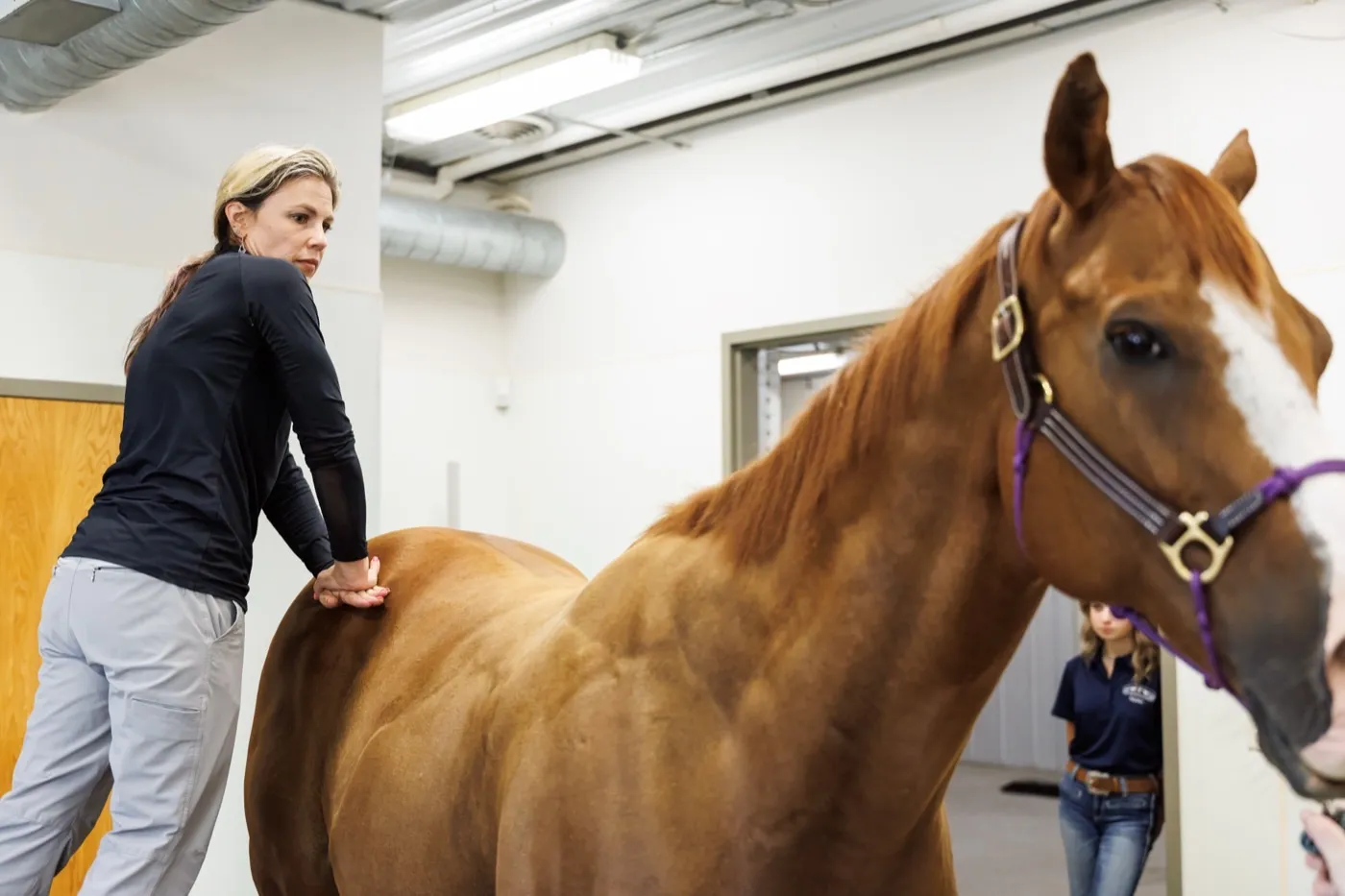
What is equine chiropractic care?
Equine chiropractic care uses gentle, targeted adjustments to address areas of restricted movement or dysfunction in the horse’s spine and musculoskeletal system. It may help improve mobility, flexibility, comfort, and overall musculoskeletal function. Chiropractic care can be used as part of a comprehensive treatment plan for horses experiencing stiffness, back pain, performance issues, or other musculoskeletal concerns.
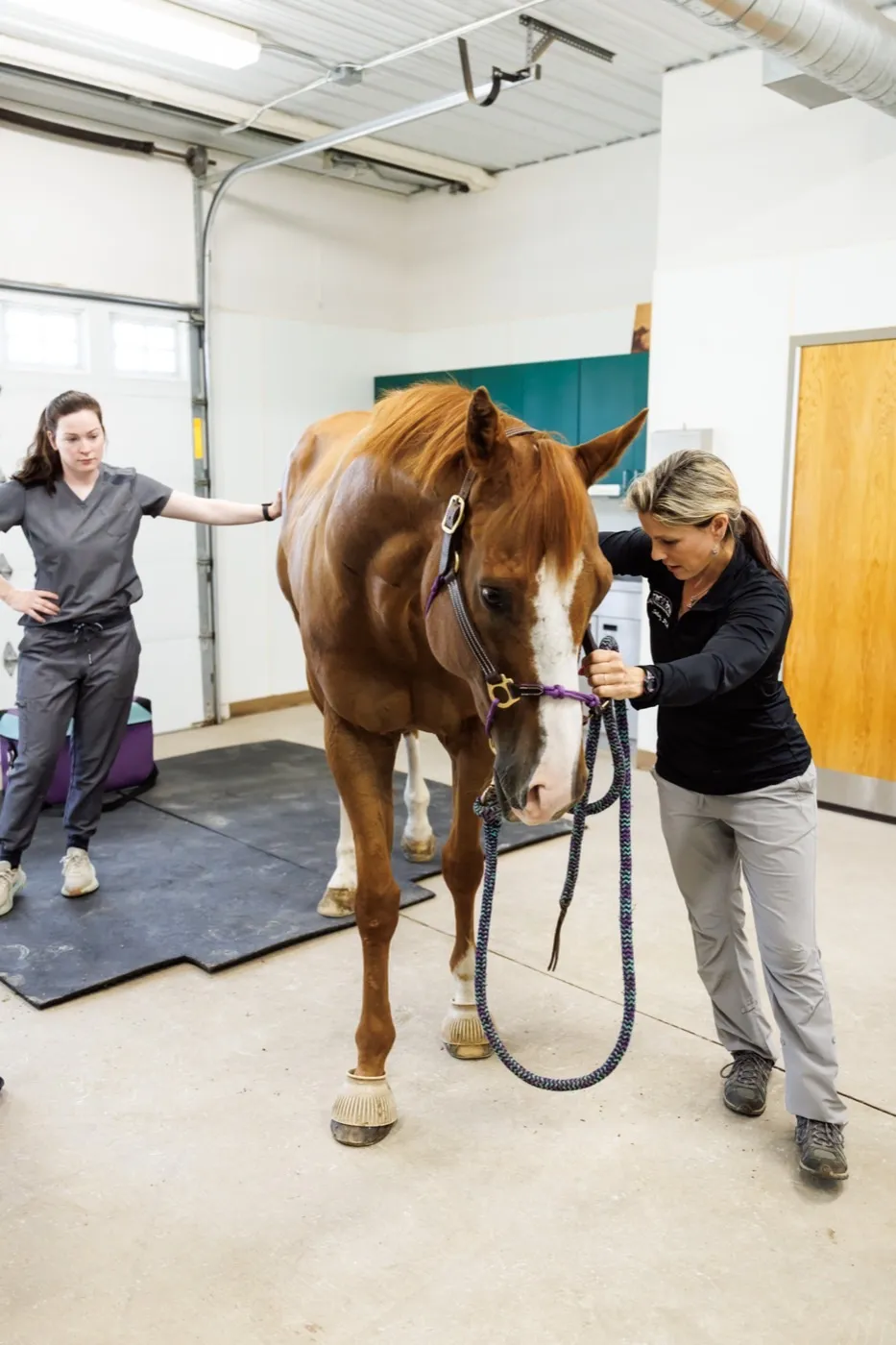
What to expect at your horse's chiropractic appointment
The visit starts with a conversation about your horse's history, workload and the changes you've noticed. Your veterinarian will watch your horse stand and move, then feel along the neck, back and pelvis to check for muscle tension, soreness and areas of restricted motion.
Adjustments are quick, controlled movements applied to specific joints or areas, and most horses tolerate them well. Afterward, we'll talk with you about turnout and riding, whether a follow-up visit would help, and whether other therapies could support your horse's progress.
Signs your horse may benefit from chiropractic care
Consider a chiropractic evaluation if your horse shows:
- A drop in performance or resistance to work
- Sensitivity when brushed or saddled along the back
- An uneven gait or trouble engaging the hindquarters
- Stiffness when bending or flexing at the poll
- Changes in posture
These signs can also point to lameness or other medical problems, so a veterinary exam comes first. As veterinarians, we can look at the whole horse and make sure chiropractic care is the right fit.
Book a chiropractic visit for your horse
Call us at (952) 435-8387 to schedule chiropractic care or to talk about whether it's a good fit for your horse.
Equine Chiropractic Care - FAQ
How do I know if my horse needs chiropractic care?
Common signs of back or neck discomfort include reduced performance, resisting work, an abnormal posture, sensitivity to touch along the back, an uneven gait and difficulty engaging the hindquarters or flexing at the poll. Chiropractic care may also help keep older horses comfortable and support fitness in sport horses. Source: Virginia Tech Veterinary Teaching Hospital
Does chiropractic care replace a lameness exam?
No. Pain is the most common cause of lameness in horses, and a veterinarian needs to find the source of that pain so it can be treated properly. A full lameness exam may include watching your horse move, flexion tests, nerve blocks and imaging. Chiropractic care works best alongside a clear diagnosis, not in place of one. Source: Merck Veterinary Manual
Why should a veterinarian perform chiropractic care?
Some conditions, such as disc disease, weakened bone, advanced joint disease or cancer, make forceful adjustments risky, and a practitioner without a thorough knowledge of anatomy and disease raises the chance of injury. A veterinarian can check for these problems before treatment and choose gentler techniques when they're safer for your horse. Source: Merck Veterinary Manual
What does the research say about chiropractic care for horses?
Studies in horses have reported increased spinal flexibility, reduced muscle tension and higher pain thresholds after spinal manipulation. The overall quality of the evidence is still low to moderate, and researchers are calling for larger, better-controlled studies. That's why we use chiropractic care as one part of a broader plan for your horse. Source: Animals (Basel), systematic review via PubMed Central
Can chiropractic care be combined with other treatments?
Yes. Integrative therapies like chiropractic care are meant to be used alongside conventional veterinary medicine, and they are often paired with rehabilitation for orthopedic and neurologic problems. Depending on your horse's needs, chiropractic care may be combined with acupuncture, medication or other therapies we offer. Source: Merck Veterinary Manual


