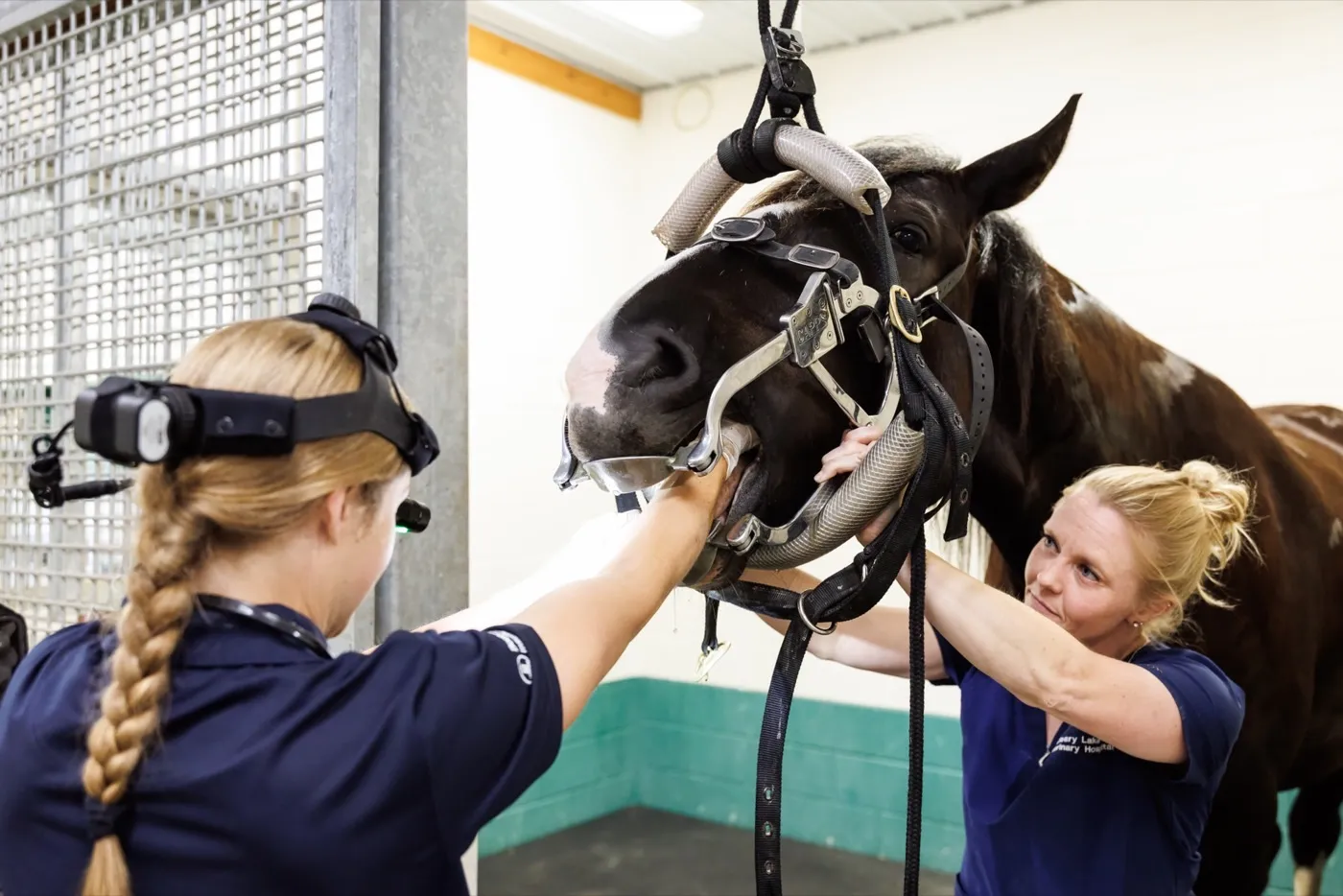
Equine dentistry at Cleary Lake
Equine Dentistry Services at Cleary Lake Veterinary Hospital focus on maintaining your horse’s oral health, comfort, and overall well-being. Our veterinarians provide comprehensive dental examinations, routine dental floating and balancing, and evaluation of teeth and oral structures for abnormalities or disease. We also provide dental X-rays to evaluate tooth roots and surrounding structures and perform dental extractions, including wolf teeth, when indicated. We can also address fractured or infected teeth and other dental conditions that may affect your horse’s comfort, ability to eat, or performance. Regular dental care helps support proper chewing, digestion, comfort, and long-term health.
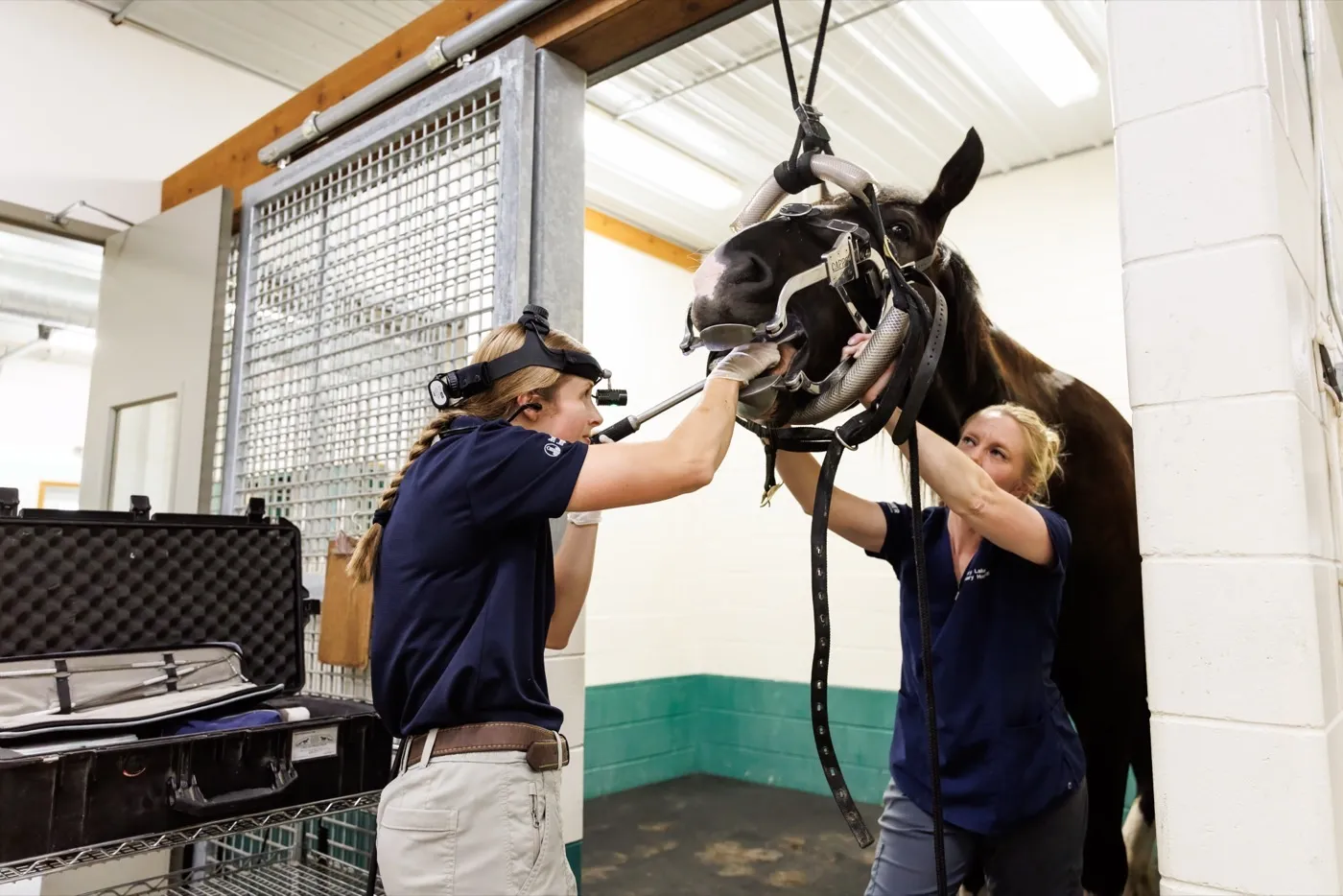
What to expect at your horse's dental exam
Most dental visits start with sedation, which keeps your horse relaxed and makes a thorough, safe exam possible. A speculum holds the mouth open so your veterinarian can see and feel every tooth, including the cheek teeth at the back of the mouth. Sharp enamel points and uneven surfaces are then filed down, or floated, to restore a comfortable, balanced bite.
If we find a loose, fractured or infected tooth, we may recommend dental X-rays to look at the roots and surrounding bone before deciding on treatment. We'll explain what we found and when your horse should be seen again.
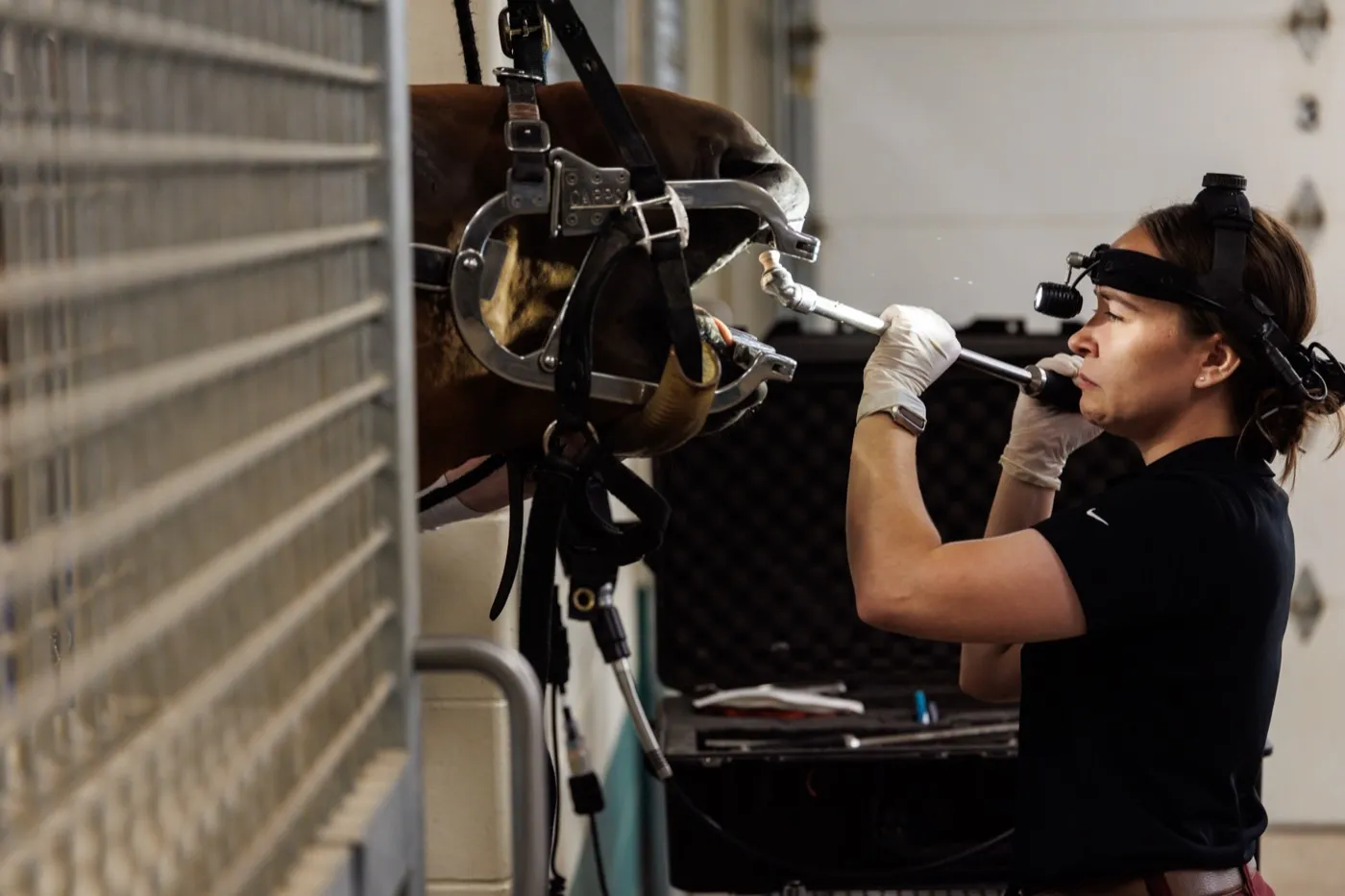
Why regular dental care matters for your horse
A horse's teeth keep growing throughout life, and uneven wear can leave sharp points and other problems that make chewing uncomfortable. Watch for:
- Dropping feed or chewing slowly
- Weight loss
- Head tossing or resistance to the bit
- Bad breath, nasal discharge or facial swelling
- Long stems or large feed particles in the manure
Young horses, whose adult teeth are still coming in, usually need dental checks more often than mature horses.
Schedule your horse's dental exam
Is your horse due for a dental check, or showing signs of discomfort while eating or under saddle? Call us at (952) 435-8387 to book a visit.
Equine Dentistry - FAQ
How often does my horse need a dental exam?
Most horses on pasture need preventive dental care about once a year, while stalled horses eating hay and grain usually need an exam at least twice a year. Young horses, roughly 2½ to 5 years old, should have their sharp edges addressed about twice a year while their permanent teeth come in. We'll recommend a schedule based on your horse's age and diet. Source: Merck Veterinary Manual
What are the signs my horse has a dental problem?
Watch for difficulty chewing, dropping partly chewed feed (quidding), excess drooling, and long stems or large feed particles in the manure. Head tossing, tilting the head while chewing and resisting the bit can also point to dental pain. Other signs include weight loss, bad breath, nasal discharge, swelling of the face or jaw and blood from the mouth. Source: University of Florida IFAS Extension
What is floating, and why is my horse sedated?
Floating means rasping the teeth to remove sharp points and keep the grinding surfaces balanced, and it's a routine part of dental maintenance. A complete exam of the premolars and molars at the back of the mouth requires sedation, a speculum and good lighting. Sedation keeps your horse calm and comfortable and lets us work safely and thoroughly. Source: Merck Veterinary Manual
What happens if my horse has an infected tooth?
A tooth root infection can spread to nearby tissues, including the sinuses, and the affected tooth can be hard to identify without a careful exam and imaging. When the damage is advanced, extracting the tooth is recommended, and many extractions can now be done through the mouth under sedation. Afterward, the opposite teeth need regular balancing. Source: Merck Veterinary Manual
Do wolf teeth need to be removed?
Not always. Wolf teeth may be removed in horses that are reluctant to accept the bit, although their presence isn't always the cause of bit problems. Extractions can be done under sedation, sometimes with local anesthetic blocks. Your veterinarian will check your horse's wolf teeth during the dental exam and talk with you about whether removal makes sense. Source: Merck Veterinary Manual


