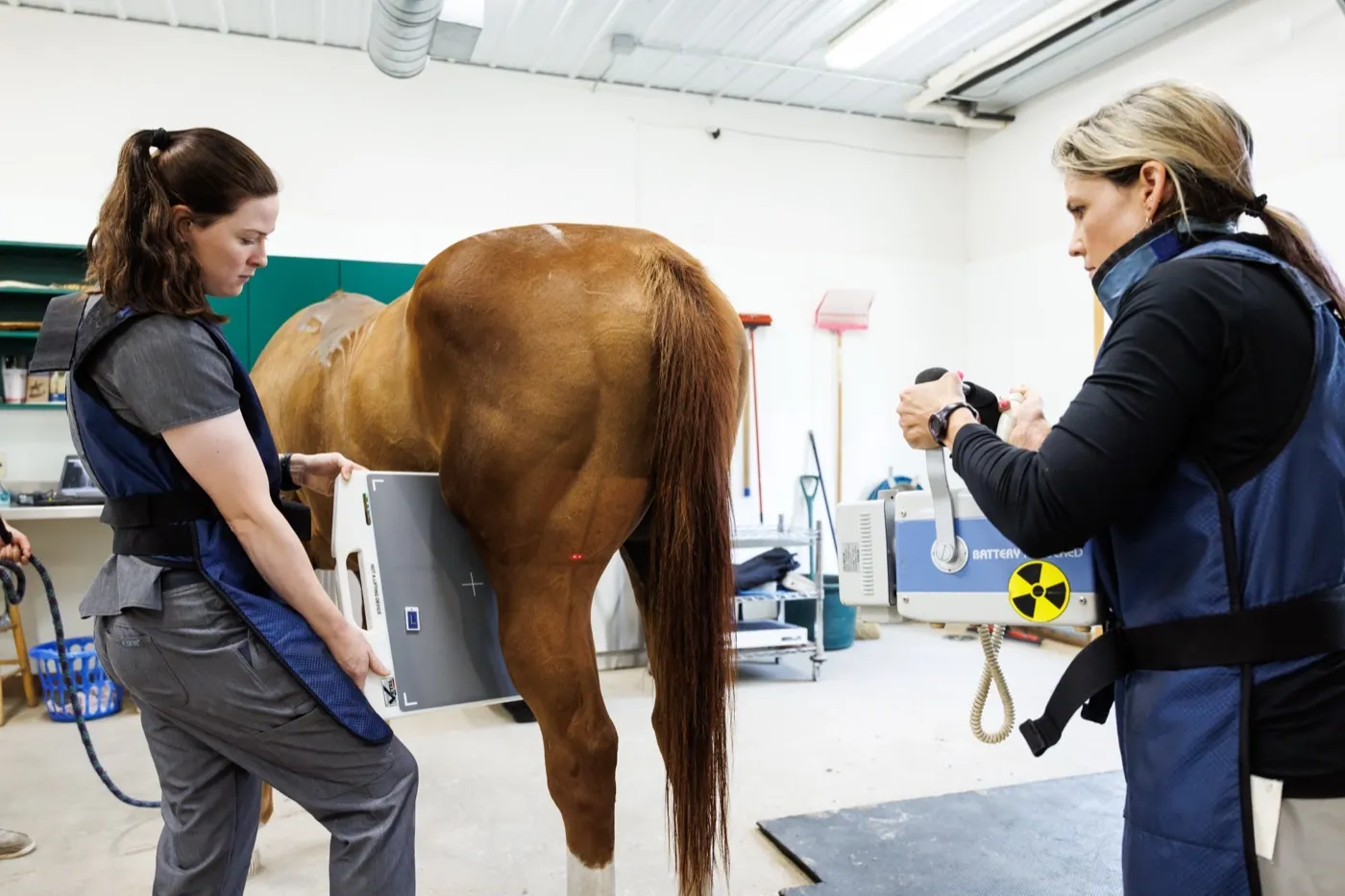
What is equine digital radiography?
Equine digital radiography uses advanced X-ray technology to produce detailed images of a horse’s bones and joints. It is a fast, non-invasive diagnostic tool commonly used to evaluate lameness, injuries, arthritis, fractures, and other conditions affecting the skeletal system. Digital images can be reviewed quickly, allowing veterinarians to make accurate diagnoses and develop appropriate treatment plans.
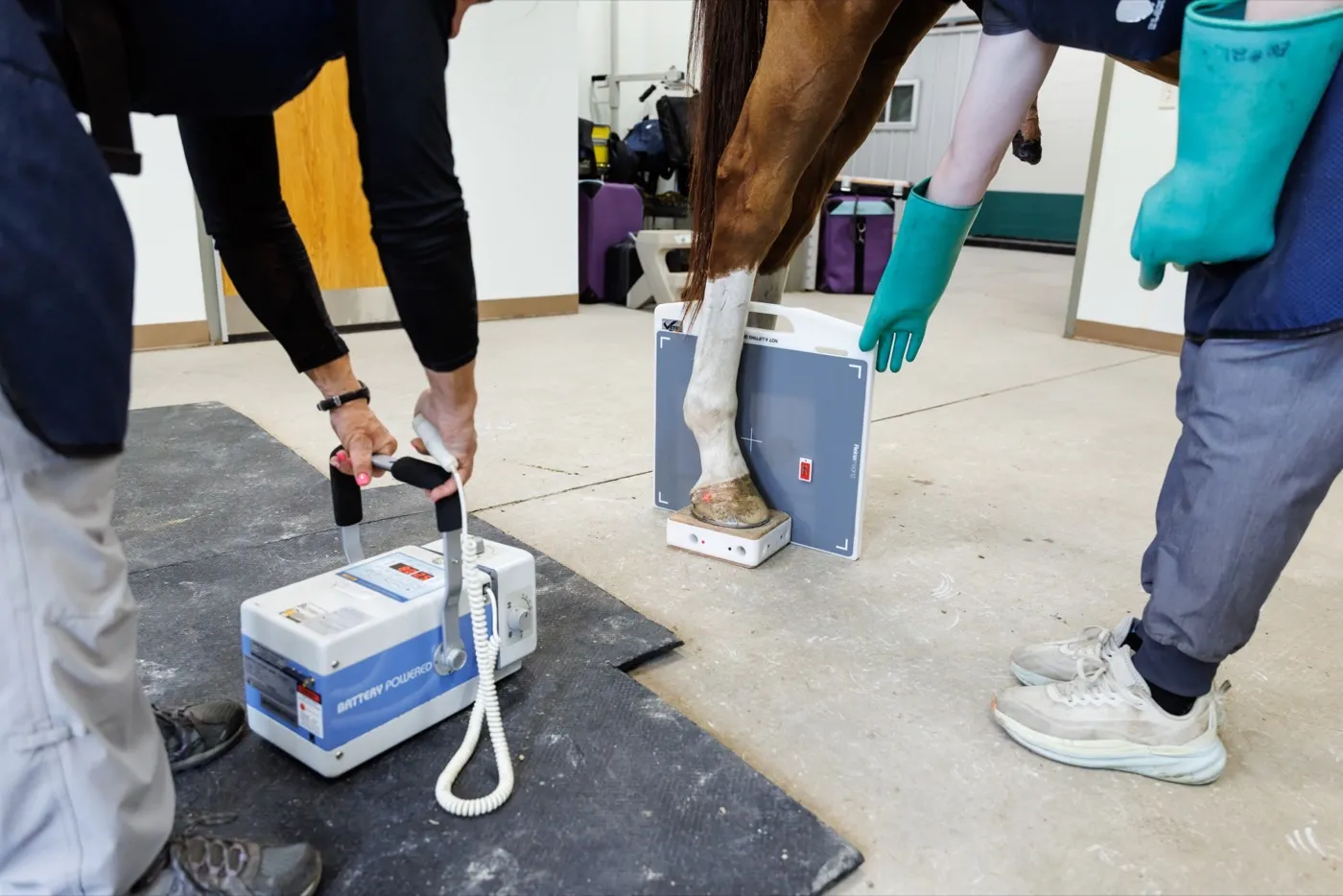
What to expect when your horse has X-rays
Most radiographs are taken while your horse stands quietly on a level surface. Your veterinarian positions a small detector beside the area being examined and takes several views from different angles, since a single image rarely tells the whole story. Some horses are given a light sedative to help them stay still and relaxed, and shoes may need to be removed or hooves cleaned for clear images of the feet.
Because the images are digital, your veterinarian can review them with you shortly after they are taken and talk through what they show and what comes next.
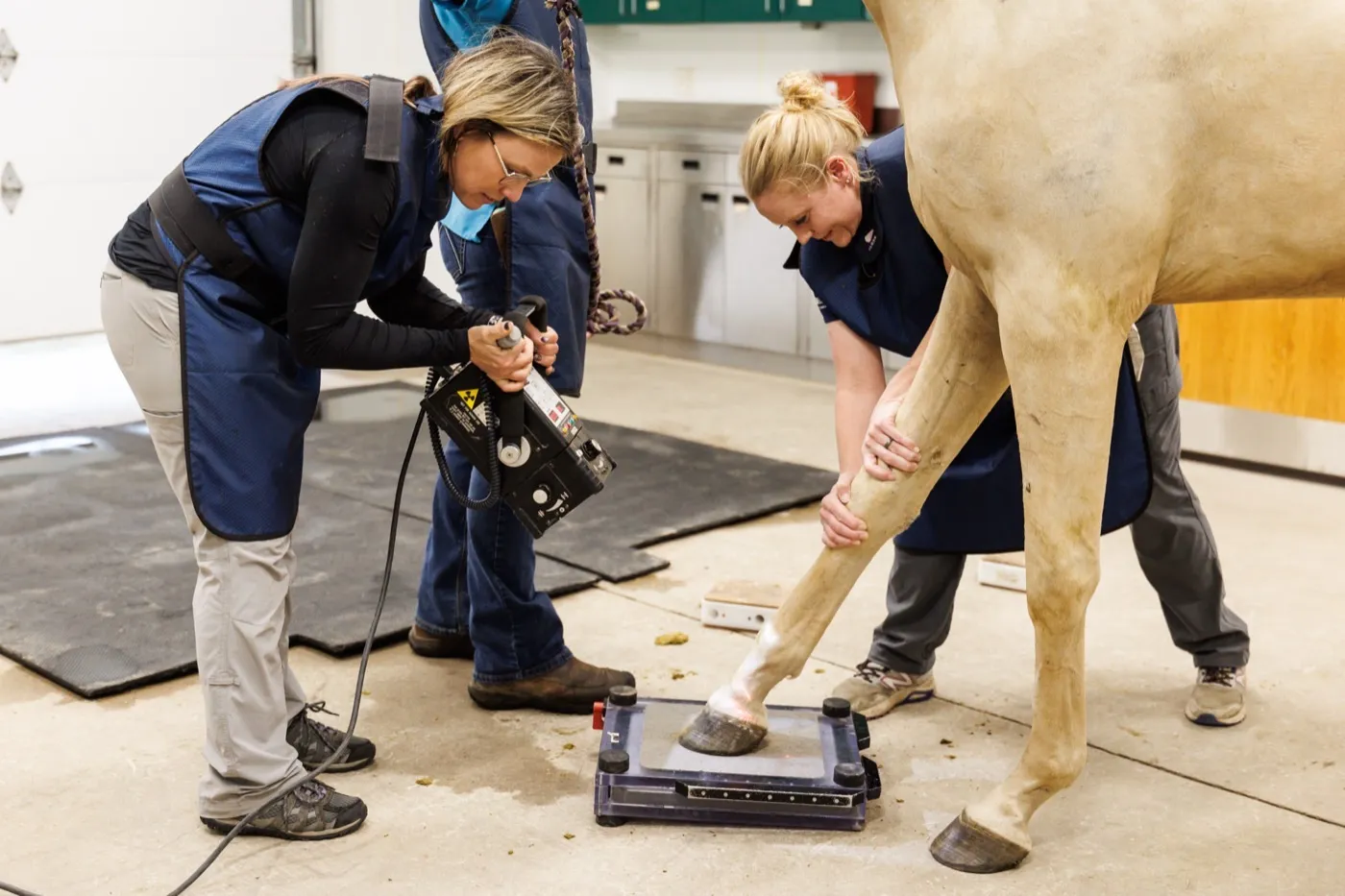
When might your horse need radiographs?
Your veterinarian may recommend radiographs when your horse:
- Is lame and the source has been narrowed to a specific area
- Has a swelling, wound or injury near a bone or joint
- Is being evaluated as part of a pre-purchase exam
- Shows signs of arthritis or stiffness that seem to be changing
- Needs follow-up images to track healing after an injury or surgery
Radiographs show bone best. When a tendon or ligament injury is suspected, ultrasound is often used alongside them for a more complete picture.
Questions about your horse’s lameness or injury?
Call us at (952) 435-8387 to schedule an evaluation. For equine emergencies, our team is available 24 hours a day, 365 days a year.
Equine Digital Radiography - FAQ
Can X-rays show tendon and ligament injuries?
Radiographs are best for evaluating bone and revealing longer-term changes such as arthritis. Tendons, ligaments and other soft tissues do not show up well on X-rays, so ultrasound is often paired with radiography to give a complete picture of an injury. Your veterinarian may recommend one or both, depending on where the problem is. Source: Merck Veterinary Manual
What problems can radiographs help find?
Radiographs can help detect joint changes such as osteoarthritis and osteochondritis, along with fractures and other injuries, developmental or congenital abnormalities, and bone disease. They are commonly used when a horse shows lameness or pain involving the hooves, legs, neck, back or teeth, and they give quick answers that help guide treatment. Source: Tufts Cummings School of Veterinary Medicine
Are X-rays only used for legs and feet?
No. Radiographs of the head can help investigate facial swelling and problems in the sinuses, the guttural pouches and the tissues at the back of the mouth and throat. Images of the neck can check for airway obstruction, and chest radiographs help evaluate the lungs, heart and diaphragm. Source: Merck Veterinary Manual
Can my horse’s radiographs be reviewed by a specialist?
Board-certified veterinary radiologists, recognized by the American College of Veterinary Radiology, complete years of additional training in diagnostic imaging, and there is now a specialty focused on equine diagnostic imaging. For a complex case, it is reasonable to ask your veterinarian whether a radiologist’s opinion would be helpful. Source: American College of Veterinary Radiology
Are radiographs part of a pre-purchase exam?
They can be. A pre-purchase exam typically includes a review of medical records, a full physical exam and a lameness evaluation, sometimes with bloodwork. Diagnostic imaging such as radiographs is added when indicated, based on your goals for the horse and what the exam finds. It is best if both buyer and seller can attend. Source: Clemson University


