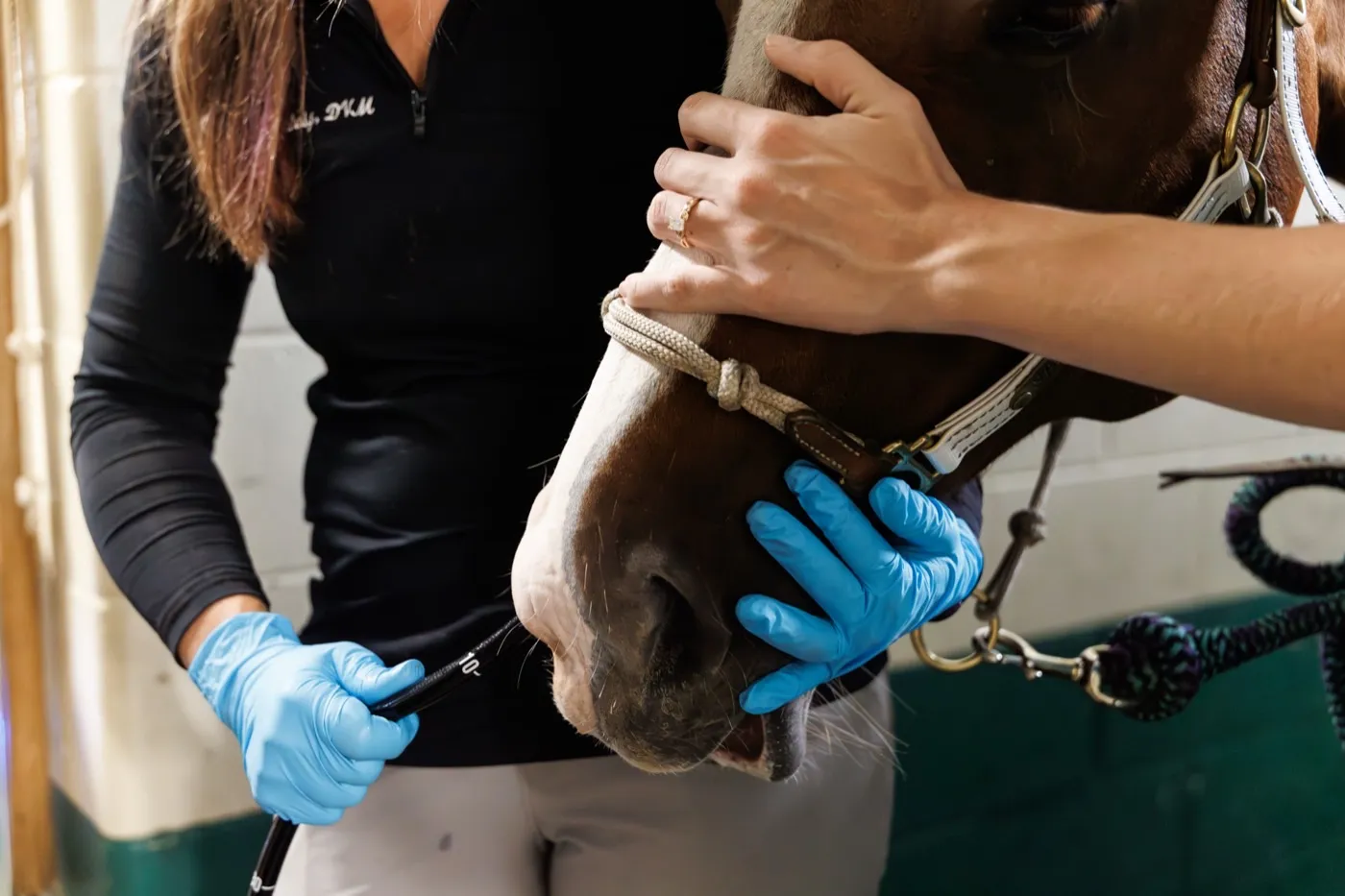
Equine endoscopy and gastroscopy at Cleary Lake
Equine Endoscopy Services at Cleary Lake Veterinary Hospital use specialized cameras to examine internal structures that cannot be fully evaluated during a routine physical examination. Our veterinarians can perform upper airway endoscopy to evaluate the nasal passages, throat, guttural pouches, and other airway structures, helping investigate breathing and performance concerns, abnormal respiratory sounds, coughing, nasal discharge, and swallowing difficulties.
We also offer gastroscopy (stomach scoping) to evaluate the stomach lining for equine gastric ulcers and other abnormalities. Gastroscopy allows our veterinarians to directly visualize the stomach and assess the severity and location of ulcers, helping guide an appropriate treatment and management plan.
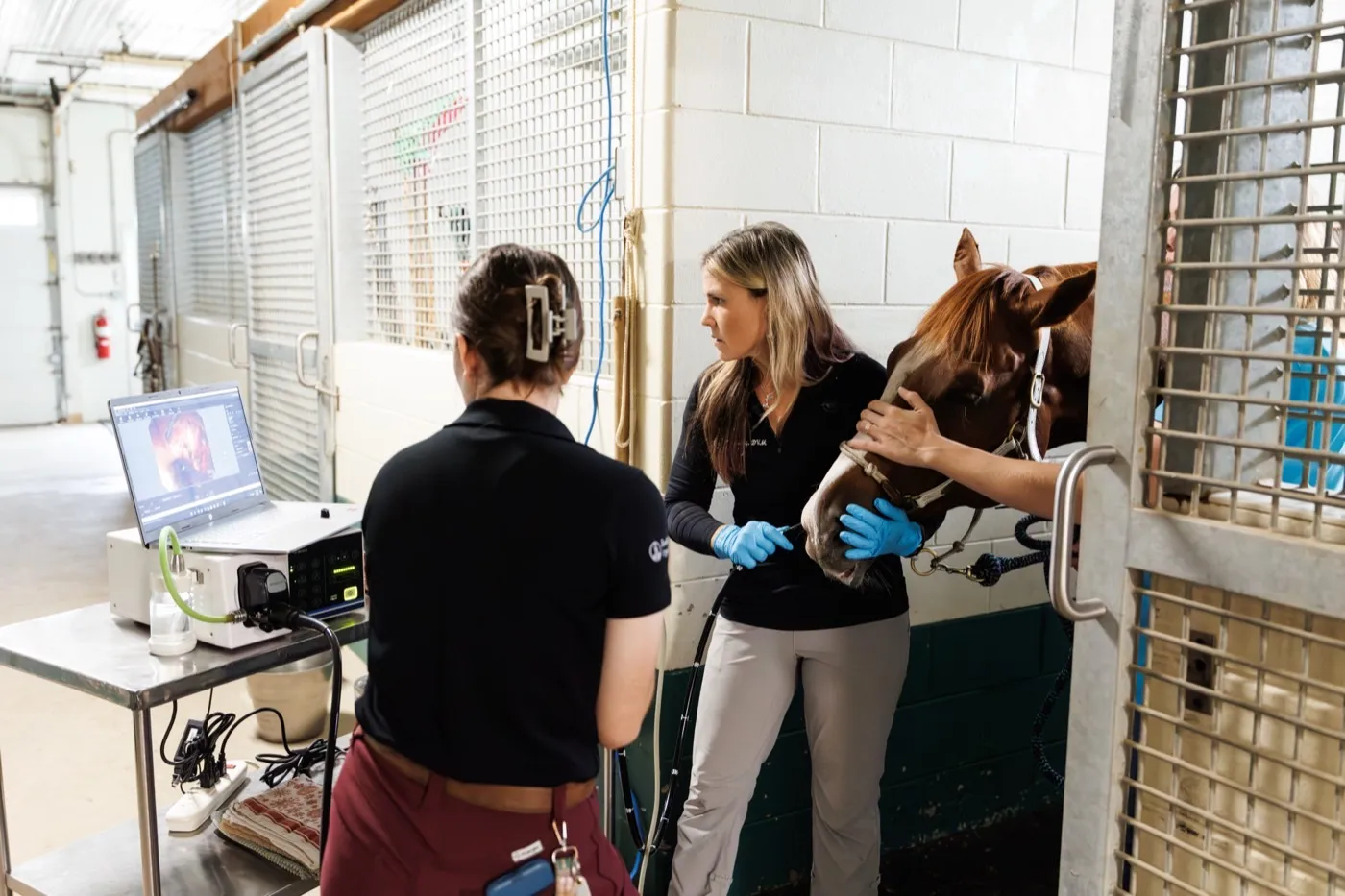
What to expect at your horse’s scope
Endoscopy is done with your horse standing, usually with light sedation to keep them calm. A flexible scope with a camera at its tip is passed gently through a nostril, and the images appear on a screen so your veterinarian can see the airway or stomach as it is examined and show you what they find.
For gastroscopy, the stomach needs to be empty for a clear view, so your veterinarian will explain how long to hold off on feed beforehand. Afterward, they will go over the findings with you and talk through any treatment or management changes.
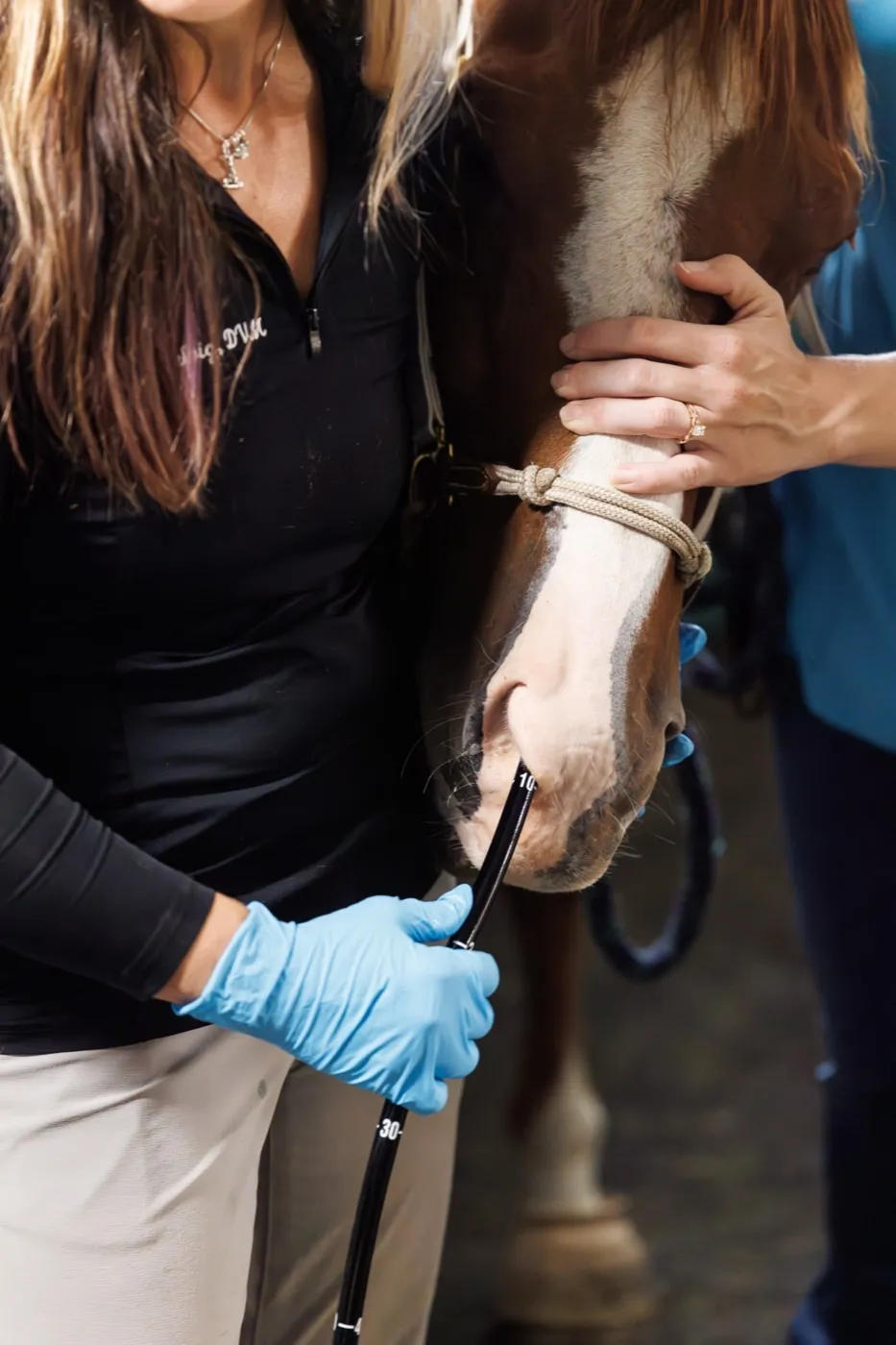
When should your horse be scoped?
Upper airway endoscopy may be worth considering if your horse:
- Makes an unusual noise when breathing during exercise
- Tires early or is not performing as expected
- Has a cough or discharge from one or both nostrils
- Has trouble swallowing
Gastroscopy is worth discussing if your horse has a poor appetite, weight loss, poor body condition, repeated mild colic or a change in attitude. These signs are often subtle, and scoping is the way to know whether ulcers are present and how severe they are.
Concerned about your horse’s breathing or stomach?
Call (952) 435-8387 to talk with our equine team and schedule an endoscopic exam.
Endoscopy - FAQ
What signs suggest my horse needs an airway scope?
Endoscopy lets your veterinarian look directly at the upper airway, guttural pouches and trachea. Common reasons to scope include an abnormal noise when breathing, difficulty breathing in, poor exercise performance, and nasal discharge from one or both nostrils. Seeing the airway directly often explains signs that a physical exam alone cannot. Source: Merck Veterinary Manual
Does my horse need to fast before gastroscopy?
Yes. Gastroscopy passes the scope down the esophagus into the stomach, and the stomach has to be empty for the lining to be seen clearly. Horses are typically fasted the night before the appointment. Your veterinarian will give you specific instructions, including when to remove hay and feed. Source: Tufts Cummings School of Veterinary Medicine
Can ulcers be diagnosed from symptoms alone?
Not reliably. Adult horses with gastric ulcers often show vague signs such as mild colic, poor appetite, slight weight loss, poor body condition or attitude changes, and these can have many other causes. Neither the signs nor routine lab tests are specific for ulcers. Endoscopy is the only reliable way to diagnose them. Source: Merck Veterinary Manual
What is “roaring,” and how is it diagnosed?
“Roaring” is the common name for laryngeal hemiplegia, a paralysis of part of the larynx that most often affects the left side. Affected horses make a noise when breathing in during exercise and may tire easily, but usually seem normal at rest. It is diagnosed with an endoscope, which shows reduced or absent movement of the laryngeal tissues. Source: Merck Veterinary Manual
How are gastric ulcers treated?
Treatment centers on reducing stomach acid so the lining can heal. Omeprazole oral paste is FDA-approved for treating gastric ulcers and preventing their return in horses and foals four weeks and older. It is prescription-only and is given once a day for four weeks, followed by a lower dose to help prevent recurrence. Source: U.S. Food and Drug Administration


