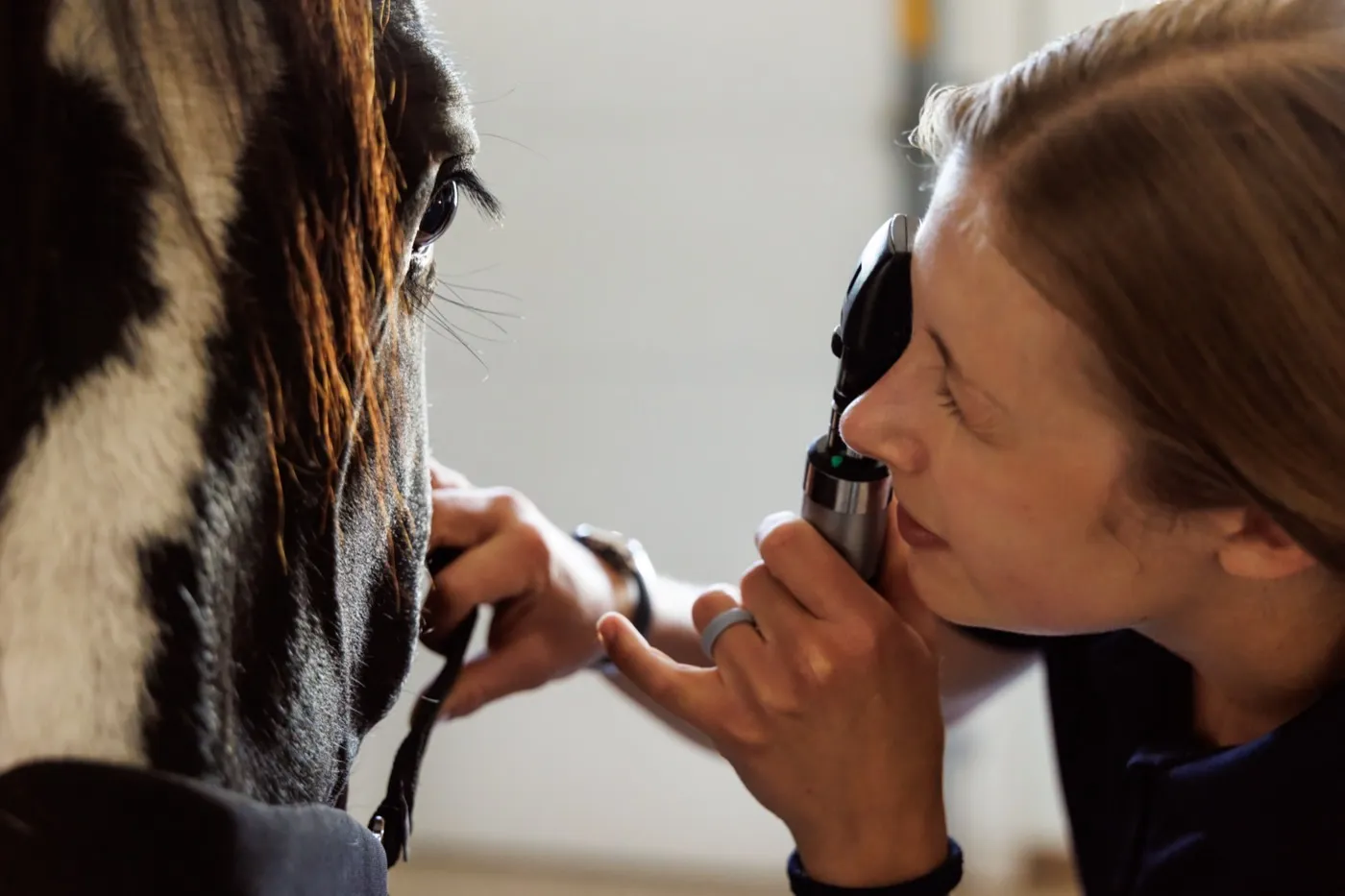
Equine eye care at Cleary Lake
Equine Ophthalmology at Cleary Lake Veterinary Hospital focuses on the diagnosis and treatment of conditions affecting your horse’s eyes and vision. Our veterinarians evaluate concerns such as eye injuries, corneal ulcers, infections, uveitis, conjunctivitis, swelling, and other ocular abnormalities. Prompt evaluation of eye problems is important, as conditions can progress quickly and may threaten vision.
We are also pleased to offer the specialized services of Dr. Andrew Rogen, a board-certified veterinary ophthalmologist, who is available to see ophthalmology cases at our hospital. His advanced expertise allows us to provide specialized evaluation and treatment for more complex eye conditions.
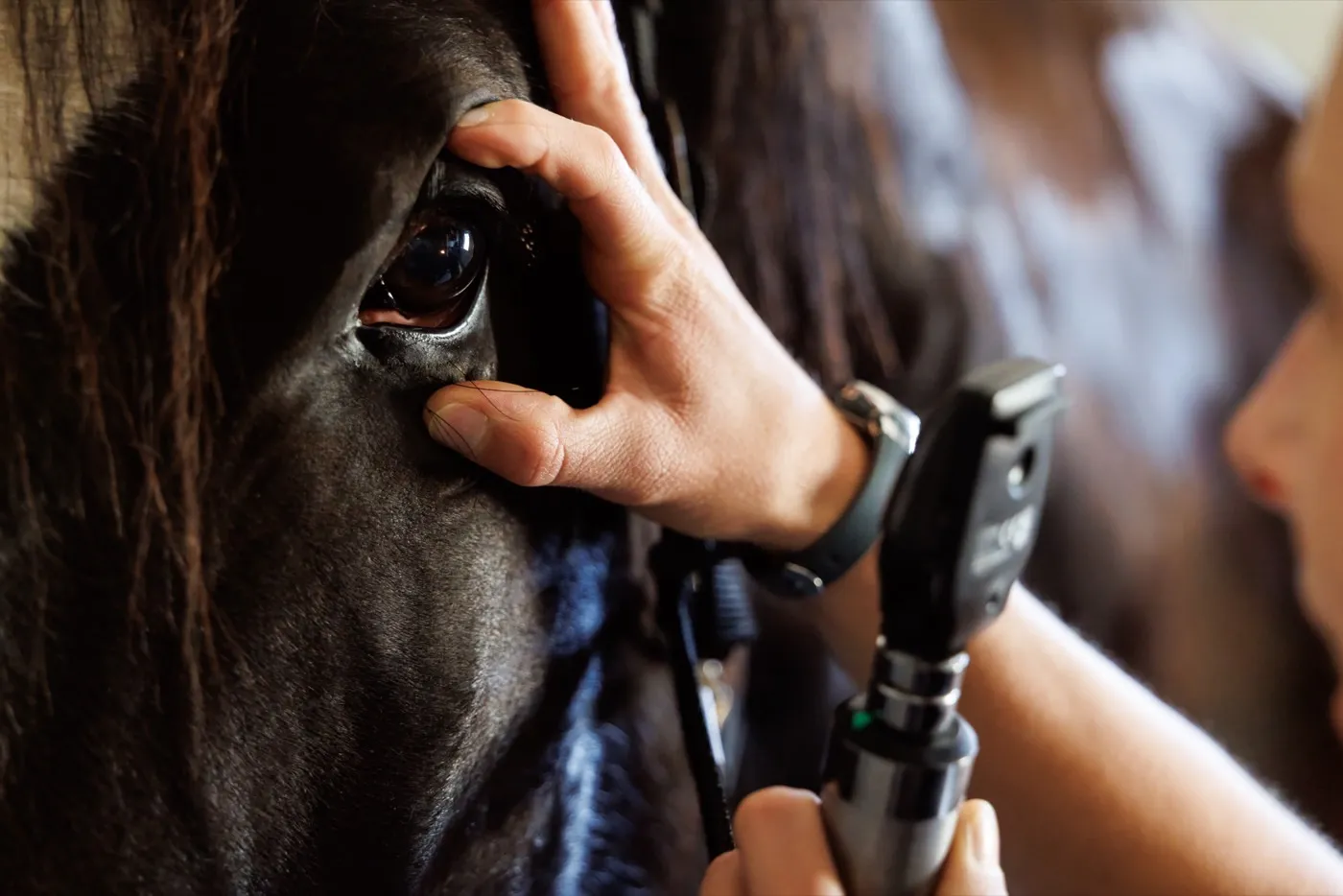
What to expect at your horse’s eye exam
We start by asking when you first noticed the problem and what has changed since. Because a sore eye makes most horses resist handling, your horse may be lightly sedated and the eyelids numbed so we can examine the eye safely and thoroughly. We look at the eyelids, the surface of the eye and the structures inside it, and we often apply a stain that highlights scratches or ulcers on the cornea.
Once we know what we are dealing with, we explain the findings, show you how to give any eye medications, and set up a recheck plan. More complex cases may be scheduled with Dr. Rogen.
When should your horse’s eye be checked?
Eye problems in horses can change within hours, so it is always better to call early. Please contact us if you notice:
- Squinting or holding the eye partly or fully closed
- Tearing, discharge or rubbing the eye
- A cloudy, white or bluish look to the eye
- Swelling or a cut on or around the eyelid
- Repeated flare-ups of a red, painful eye
Equine emergency service is available 24 hours a day, 365 days a year, so you never have to wait until morning with a painful eye.
Worried about your horse’s eye?
Call us at (952) 435-8387 and we will help you decide how quickly your horse needs to be seen. Equine emergency care is available around the clock.
Equine Ophthalmology - FAQ
Is a squinting or teary eye an emergency for my horse?
It should be treated as one. Squinting, tearing, a hazy look to the eye or frequent rubbing can be early signs of a corneal ulcer or uveitis, and some eye conditions can worsen within 24 hours. Contact your veterinarian at the first sign of eye pain rather than waiting to see if it improves. Source: American College of Veterinary Ophthalmologists
How is a corneal ulcer diagnosed and treated?
A corneal ulcer is a sore on the clear surface of the eye. Your veterinarian may apply a fluorescein dye that makes even small ulcers easy to see. Shallow ulcers are usually treated with topical antibiotics and pain relief, while deep or infected ulcers may need more intensive care or surgery. Prompt treatment helps protect your horse’s vision. Source: Merck Veterinary Manual
What is equine recurrent uveitis, or moon blindness?
Equine recurrent uveitis is repeated inflammation inside the eye and is the most common cause of blindness in horses. Flare-ups can cause tearing, squinting, redness and cloudiness. Over time it can lead to cataracts, glaucoma and vision loss. There is no cure, but anti-inflammatory treatment and longer-term options can reduce flare-ups and help preserve vision. Source: Merck Veterinary Manual
My horse cut its eyelid. Can it be repaired?
Usually, yes. Eyelid lacerations are typically repaired with the horse sedated and the area numbed, followed by anti-inflammatory and antibiotic medication. When they are treated promptly the outlook is generally good, which is why it is important to call as soon as you find the wound rather than letting it heal on its own. Source: American Association of Equine Practitioners
Can a horse live a normal life with one eye?
Most horses adapt very well. Removing an eye is usually a last resort for severe injury or a chronically painful, blind eye, such as from uveitis or glaucoma. Many horses were already blind in that eye, so they adjust easily, and horses with one eye often return to their previous work. Source: American College of Veterinary Surgeons


