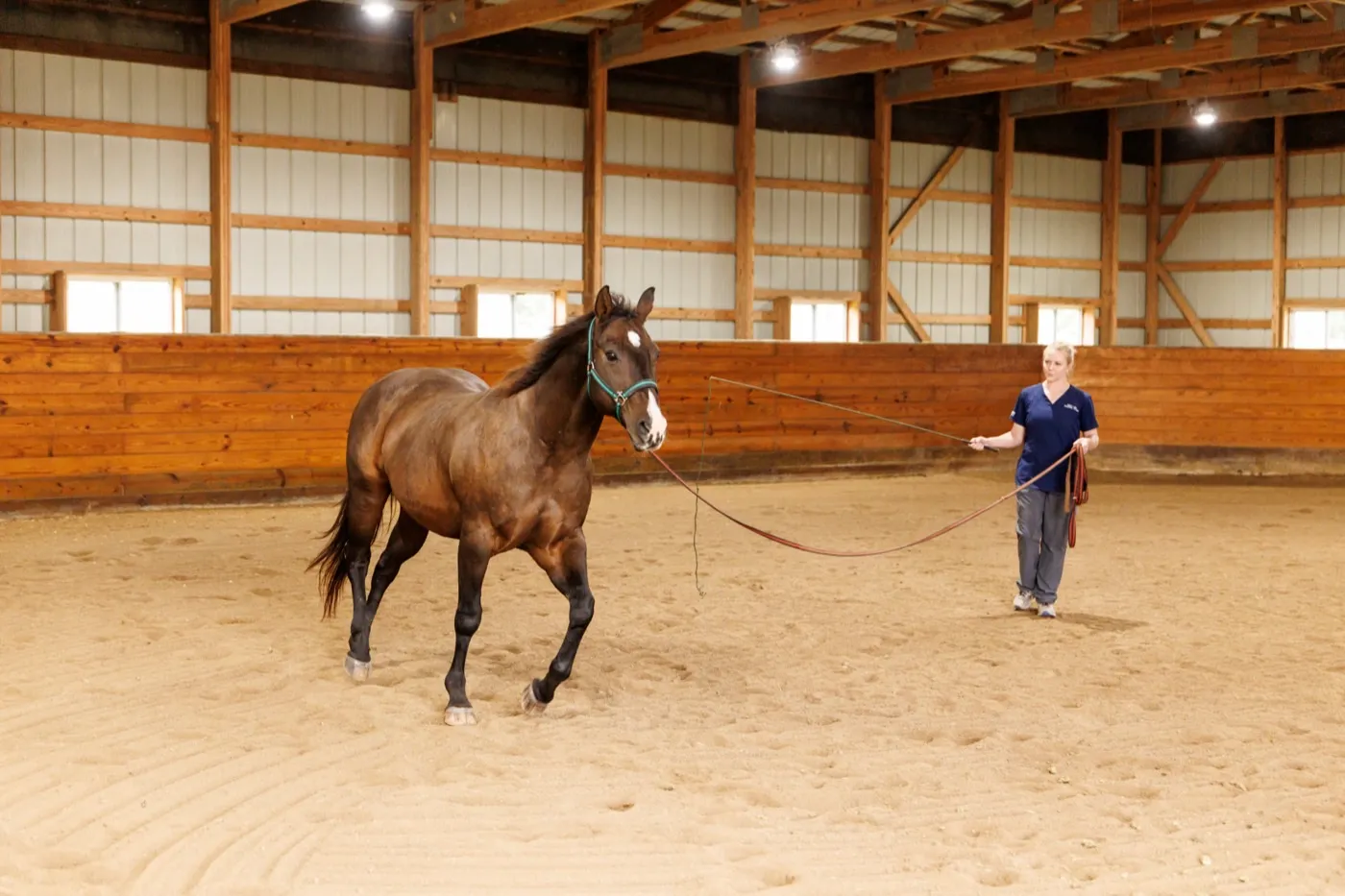
What is an equine pre-purchase examination?
Equine Pre-Purchase Examinations at Cleary Lake Veterinary Hospital provide a comprehensive evaluation of a horse’s health and soundness before purchase. Our veterinarians perform a detailed physical examination, assess the horse’s musculoskeletal system and movement, and discuss the horse’s intended use with the prospective buyer. Additional diagnostics, such as digital radiographs, ultrasound, endoscopy, or laboratory testing, may be recommended based on the horse’s age, history, intended use, and findings during the examination. Our goal is to provide you with the information you need to make an informed purchasing decision.
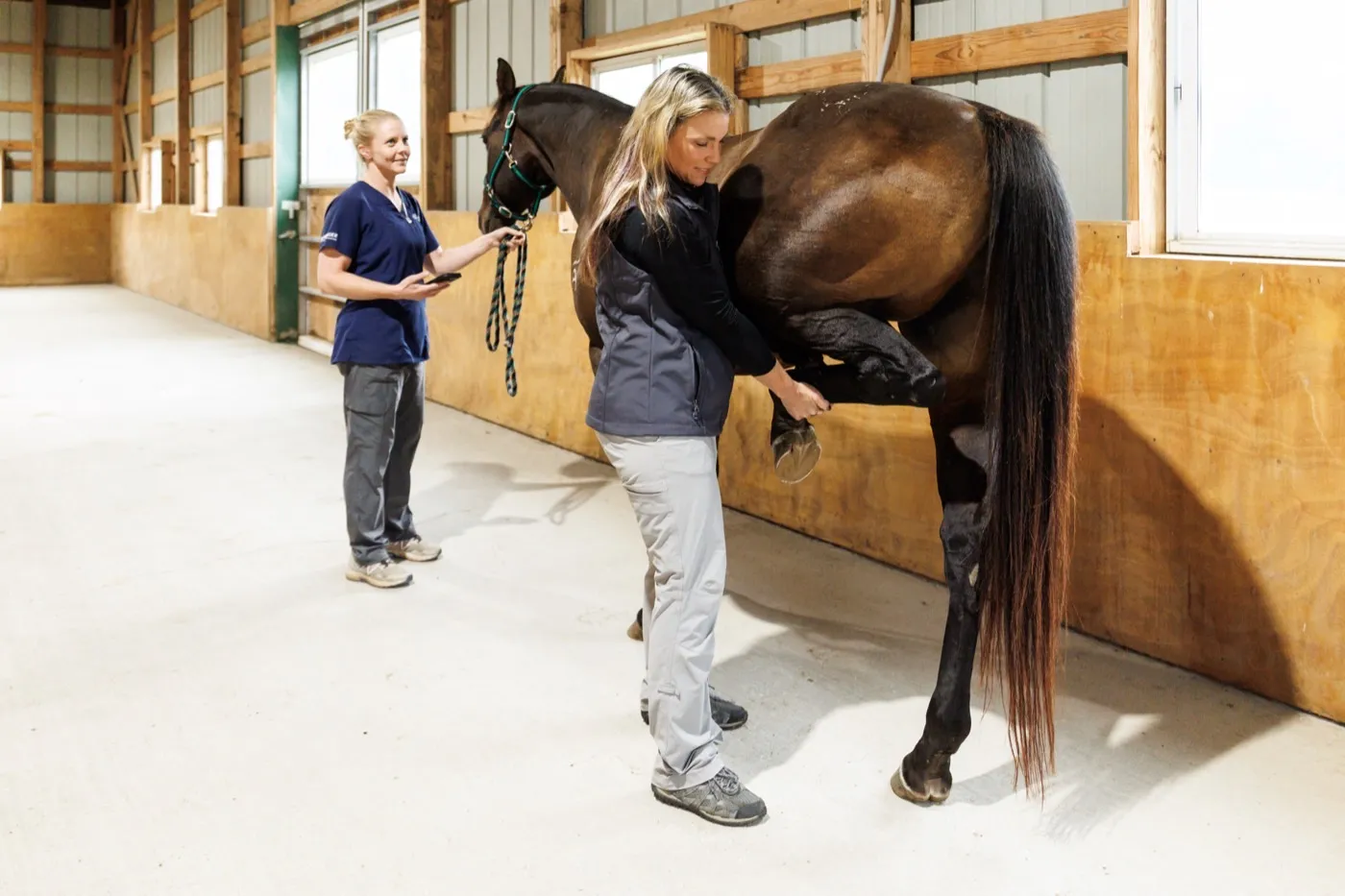
What to expect during a pre-purchase exam
Before the appointment, we talk with you about how you plan to use the horse, your budget and which tests make sense. It helps to ask the seller for the horse’s health and farrier records ahead of time.
On exam day we check the horse from nose to tail at rest, then watch it move in hand, on the lunge and sometimes under saddle. Flexion tests help reveal subtle soreness. If you choose added diagnostics such as radiographs, ultrasound, endoscopy or bloodwork, we complete those and then walk you through every finding and what it may mean for the job you have in mind.
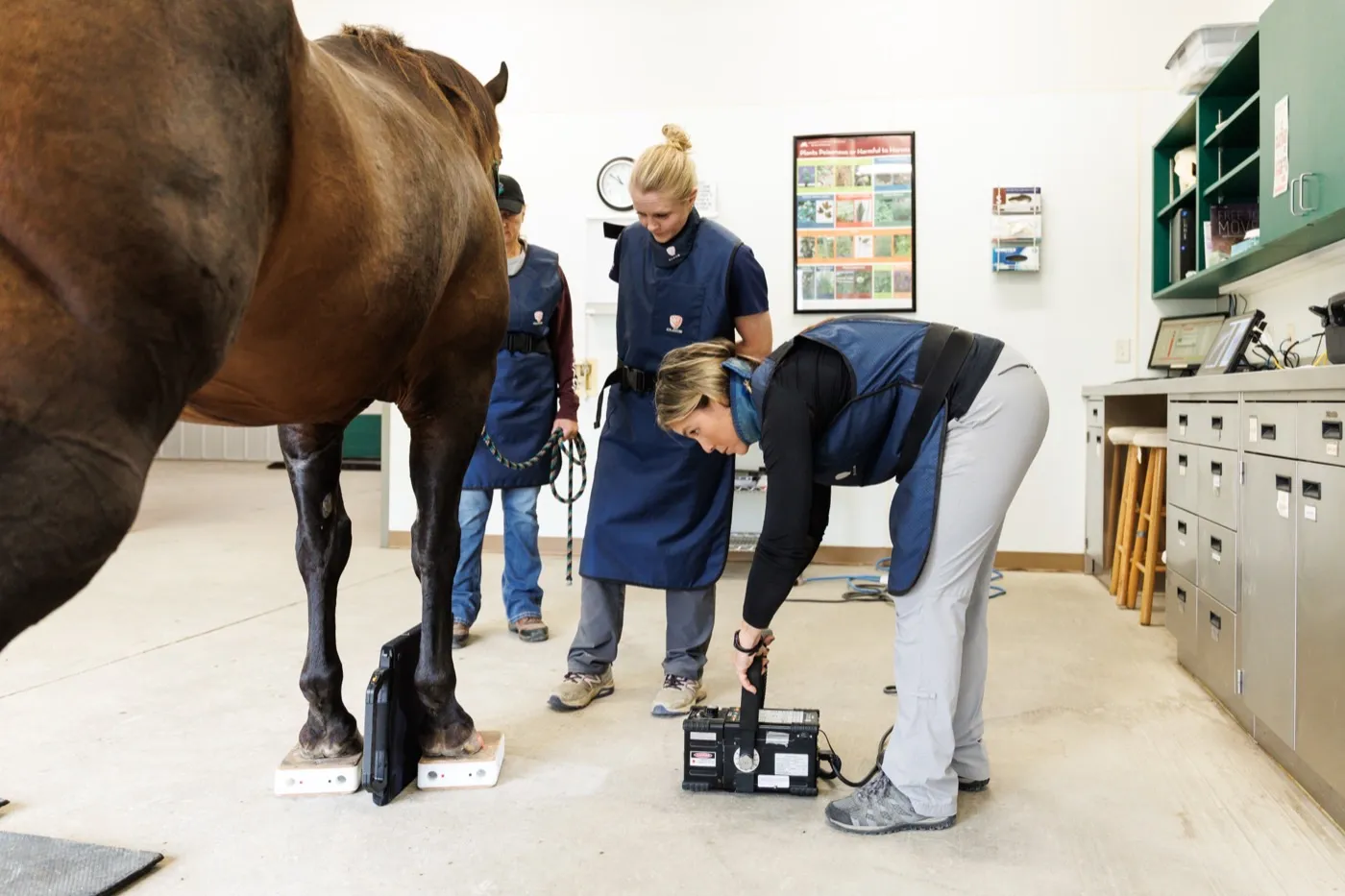
Why a pre-purchase exam matters before you buy
Buying a horse is a big commitment, and many health and soundness issues are not obvious during a test ride. A pre-purchase exam gives you an independent look at the horse’s condition on the day of the exam so you can weigh any findings before money changes hands.
An exam is worthwhile whether you are buying a first trail horse, a youth mount, a broodmare or a competition prospect. It is not a pass or fail test. Instead, it helps you understand the risks you are taking on and decide whether this horse fits your goals.
Schedule a pre-purchase exam
Found a horse you love? Call us at (952) 435-8387 to plan an exam that fits your goals and the horse’s intended use.
Pre-Purchase Examinations - FAQ
What does a pre-purchase exam include?
A typical exam includes confirming the horse’s identity and age, a thorough physical exam including the eyes, and a soundness evaluation at the walk and trot, with flexion tests when appropriate. Optional add-ons include radiographs, ultrasound, upper airway endoscopy, bloodwork and drug testing. A thorough exam finds at least some abnormal findings in almost every horse. Source: Merck Veterinary Manual
Will the veterinarian tell me whether the horse passes or fails?
No. A pre-purchase exam is a snapshot of the horse’s health on that day, not a pass or fail test. Your veterinarian explains each finding and its possible significance for your plans, and you use that information to decide whether the horse fits your goals and budget. Source: Penn State Extension
Do I need radiographs as part of the exam?
Radiographs are optional but often recommended, especially for sport and performance prospects. A full set for many sport horses covers the feet, fetlocks, hocks, stifles, neck and back, while a smaller set can screen common problem areas to save cost. Your veterinarian can help you choose based on the horse’s age and intended use. Source: Cornell University College of Veterinary Medicine
Can a pre-purchase exam guarantee the horse will stay sound?
No. The exam reflects the horse’s condition on the day it is examined, and some conditions are difficult to detect at a single visit. It also does not judge temperament, value or suitability for a specific rider. For those matters, buyers are encouraged to consider a written warranty from the seller. Source: American Association of Equine Practitioners
What will I receive after the exam?
You receive a record of the exam that identifies the horse, notes when and where it was examined, lists the procedures performed and describes any abnormal findings with the veterinarian’s opinion of their significance. Any recommended tests you chose to decline are noted as well. The decision to buy remains yours. Source: American Association of Equine Practitioners


