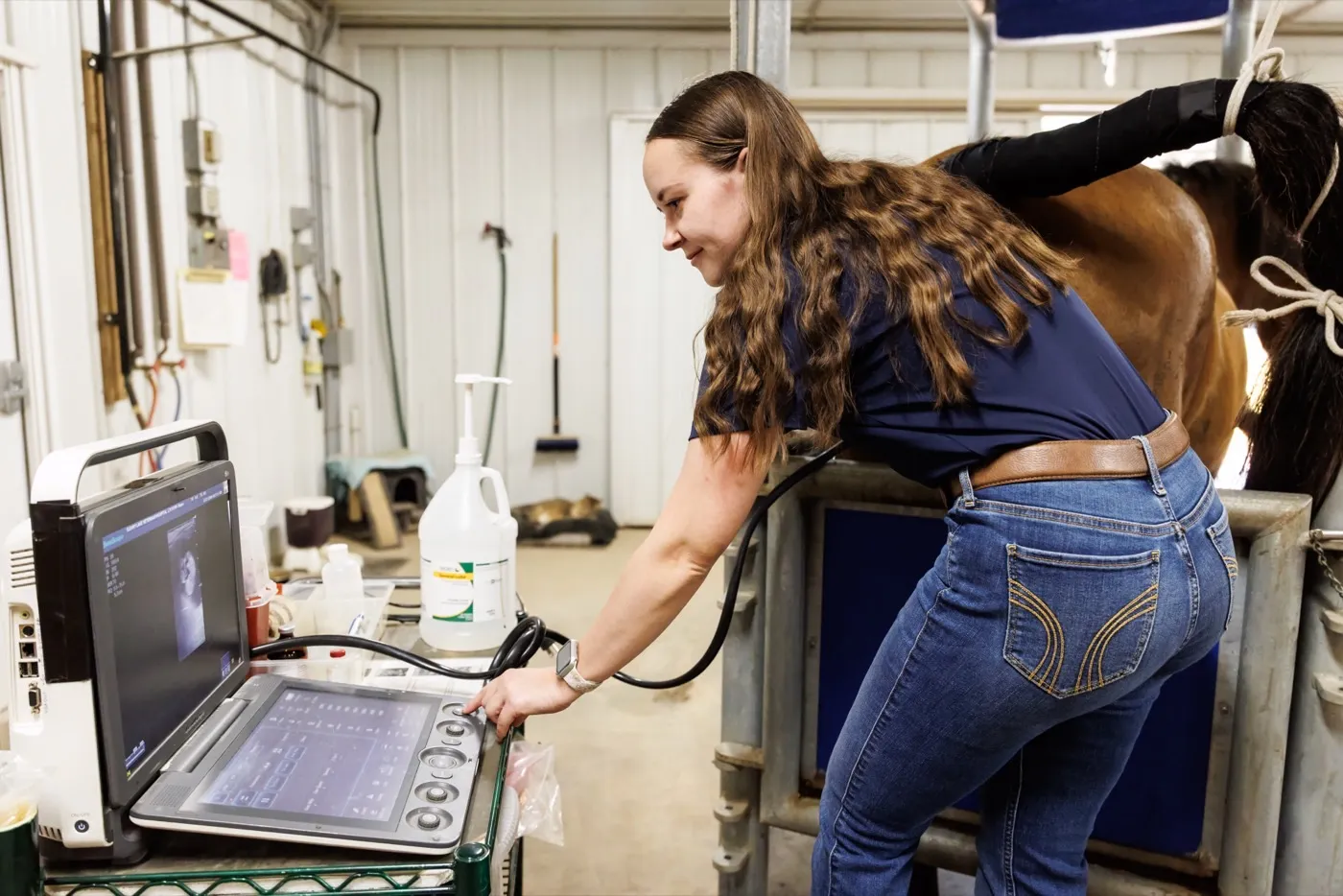
Equine reproduction services at Cleary Lake
Equine Reproduction Services at Cleary Lake Veterinary Hospital provide comprehensive reproductive care for mares and stallions. Our services include breeding soundness examinations, artificial insemination with fresh, cooled, and frozen semen, pregnancy and reproductive monitoring, embryo flushing and transfer, and frozen semen storage. We also offer stallion breeding soundness evaluations, semen collection and evaluation, breeding management, and semen shipping. Our experienced veterinary team provides individualized reproductive care to help maximize breeding success and support the health of both mare and stallion.
What to expect when you breed your mare with us
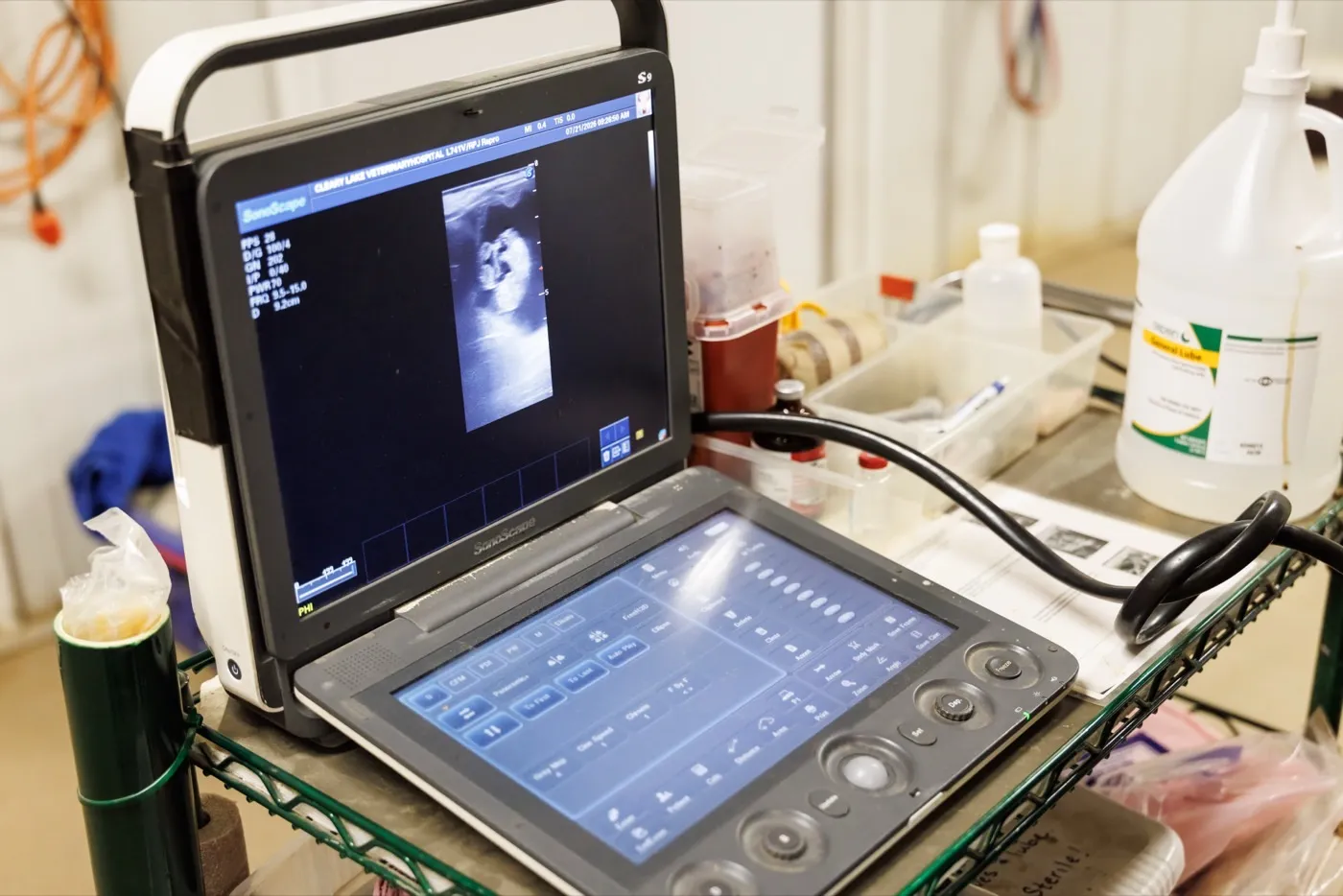
Most breeding plans start with a breeding soundness exam so we can catch and address problems before the season. Once your mare comes into heat, we follow her follicles with ultrasound to time insemination as closely as possible to ovulation, which matters most with shipped cooled or frozen semen.
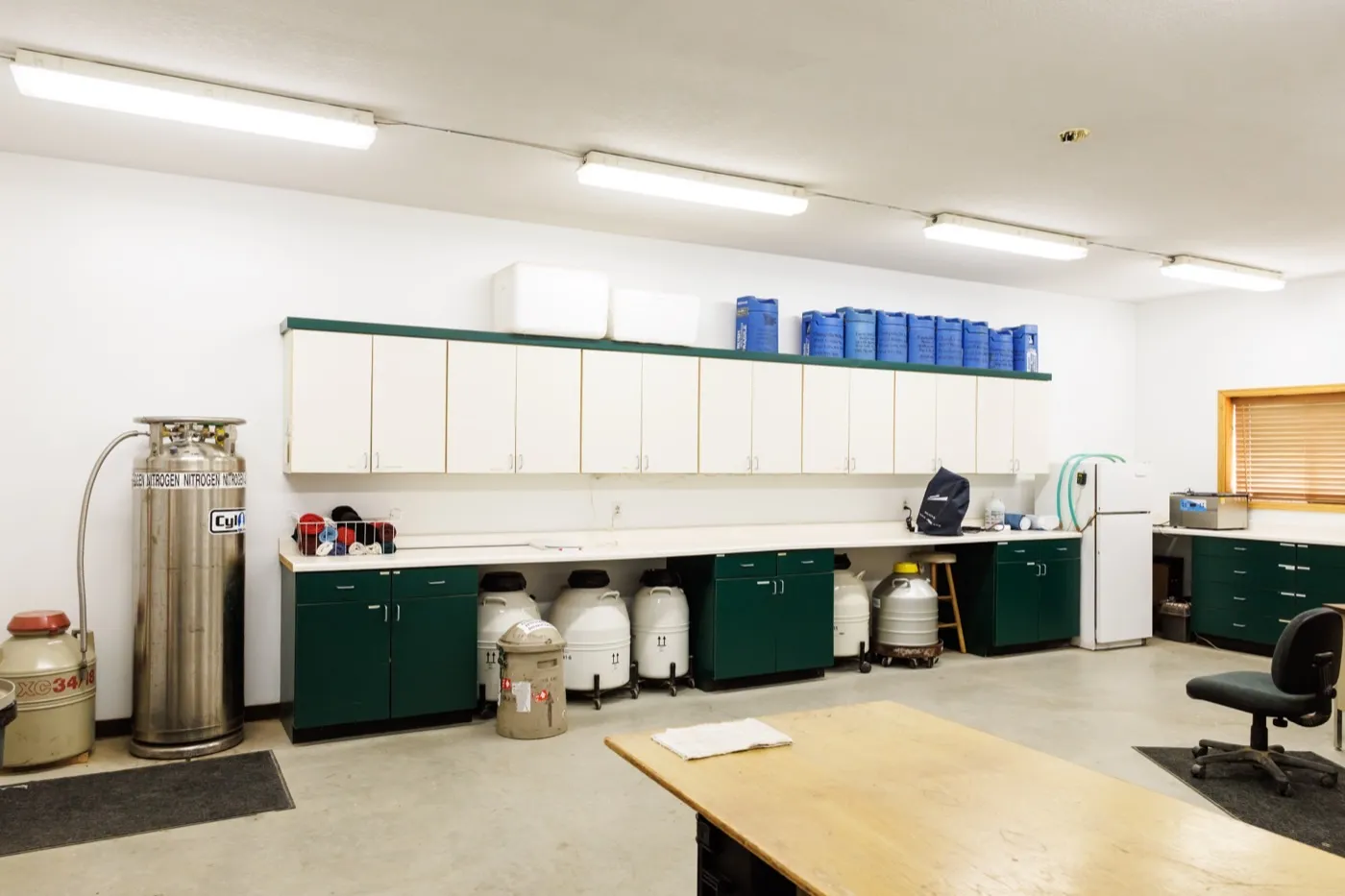
After breeding, we confirm ovulation and schedule early pregnancy checks to look for a heartbeat and rule out twins. Our on-site reproduction center lets us handle much of this work in one place, and we keep you updated at every step.
Who our reproduction services are for
We work with owners at every stage of breeding, including:
- First-time breeders planning a single foal from a family mare
- Mares that have had trouble getting or staying in foal
- Competition mares whose owners want a foal through embryo transfer while the mare stays in work
- Stallion owners who need breeding soundness evaluations, semen collection, shipping or frozen storage
Whatever your goals, we will help you build a plan that fits your mare or stallion and your timeline.
Plan your breeding season with us
The best results start with planning ahead. Call us at (952) 435-8387 to schedule a breeding soundness exam or talk through your breeding plans.
Reproduction - FAQ
Does my mare need a breeding soundness exam?
It is a good idea before breeding, before buying a broodmare and for any mare that has failed to get in foal. The exam can include an external exam, rectal palpation and ultrasound of the reproductive tract, a vaginal exam, and a uterine culture, cytology or biopsy. Finding problems early lets them be treated before breeding is scheduled. Source: Merck Veterinary Manual
How is a mare inseminated with cooled shipped semen?
Cooled semen is extended, chilled and shipped in a special transport container. The mare is monitored by palpation and ultrasound, and ovulation may be induced with medication once a dominant follicle reaches the right size. Semen is placed into the uterus before ovulation, and good pregnancy rates are possible when properly handled semen is used within 48 hours. Source: Merck Veterinary Manual
When can you tell if my mare is pregnant?
An embryo may first be seen on ultrasound around 9 to 10 days after ovulation. A common schedule checks for pregnancy and twins at days 14 to 18, confirms a heartbeat and rechecks for twins at days 25 to 30, evaluates fetal development at days 40 to 60, and confirms pregnancy again in the fall. Source: Merck Veterinary Manual
How does embryo transfer work?
The donor mare is bred, and about 7 or 8 days after ovulation her uterus is flushed to recover the embryo. The embryo is then transferred into a recipient mare whose cycle has been synchronized with the donor’s. Embryo transfer lets performance mares keep competing and can help some older or subfertile mares produce a foal. Source: Merck Veterinary Manual
What is included in a stallion breeding soundness evaluation?
A stallion evaluation reviews his breeding history and general health, including any lameness that could affect breeding. It also includes an exam of the external genitalia, measurement of the testes to estimate sperm output, an internal exam by palpation and ultrasound, cultures to screen for infectious organisms, and collection and evaluation of semen. Source: Merck Veterinary Manual


