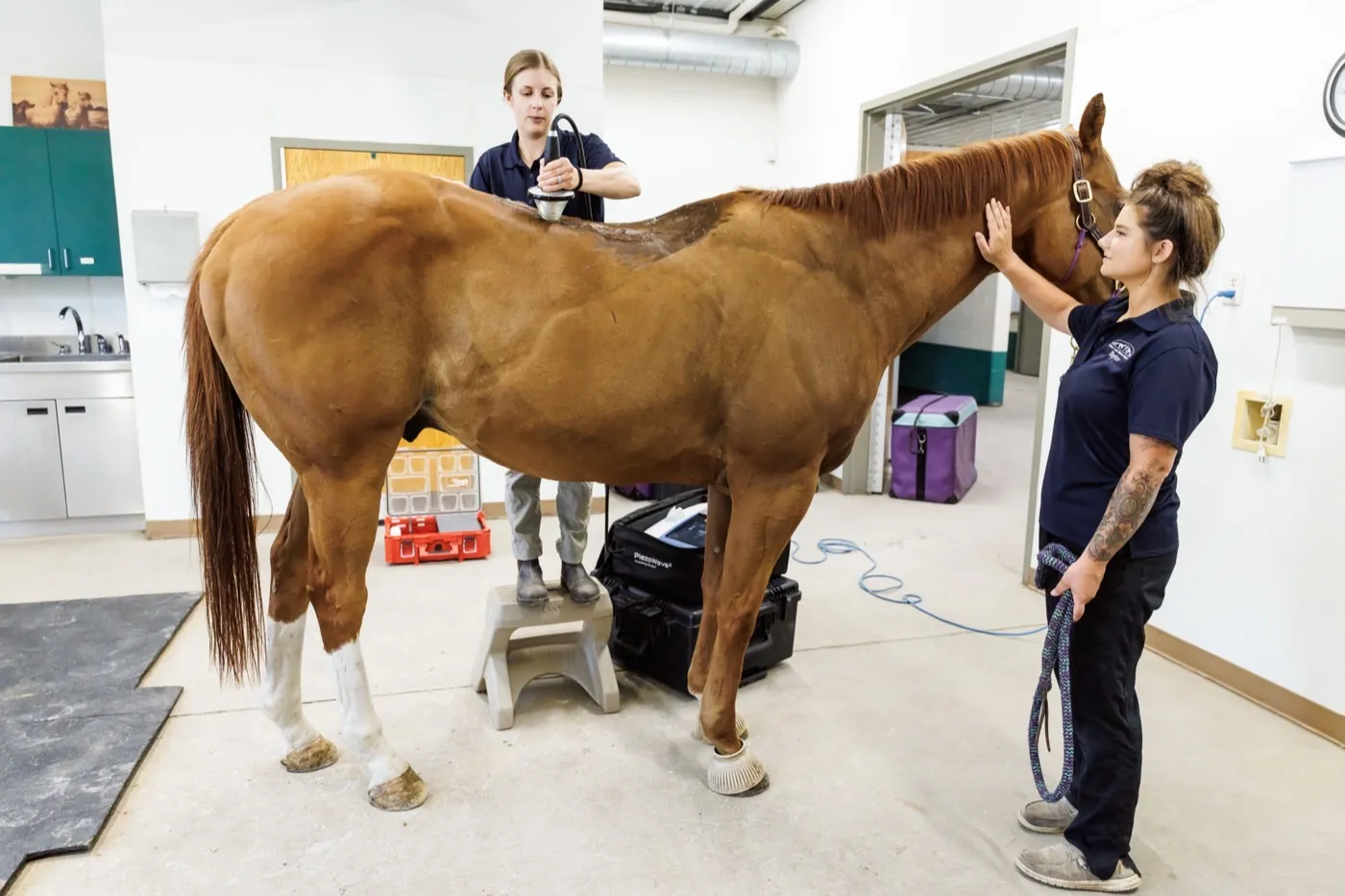
What is equine shockwave therapy?
Shockwave therapy is a non-invasive treatment used to help manage certain musculoskeletal conditions in horses. It uses focused sound waves to stimulate blood flow, promote tissue healing, reduce pain and inflammation, and support the repair of injured tissues. Shockwave therapy is commonly used for tendon and ligament injuries, muscle pain, arthritis, and other chronic or difficult-to-heal orthopedic conditions.
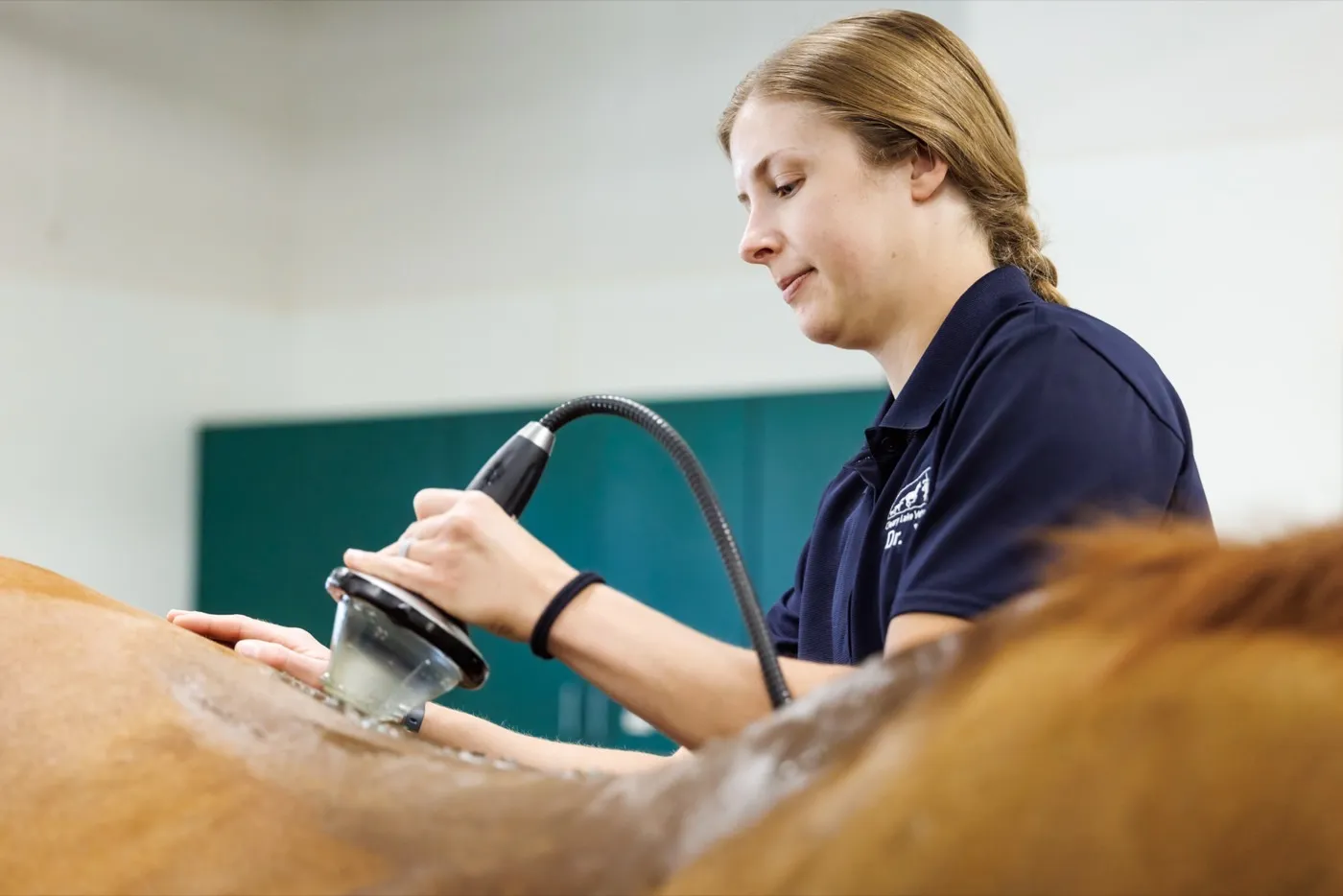
What to expect at your horse’s shockwave session
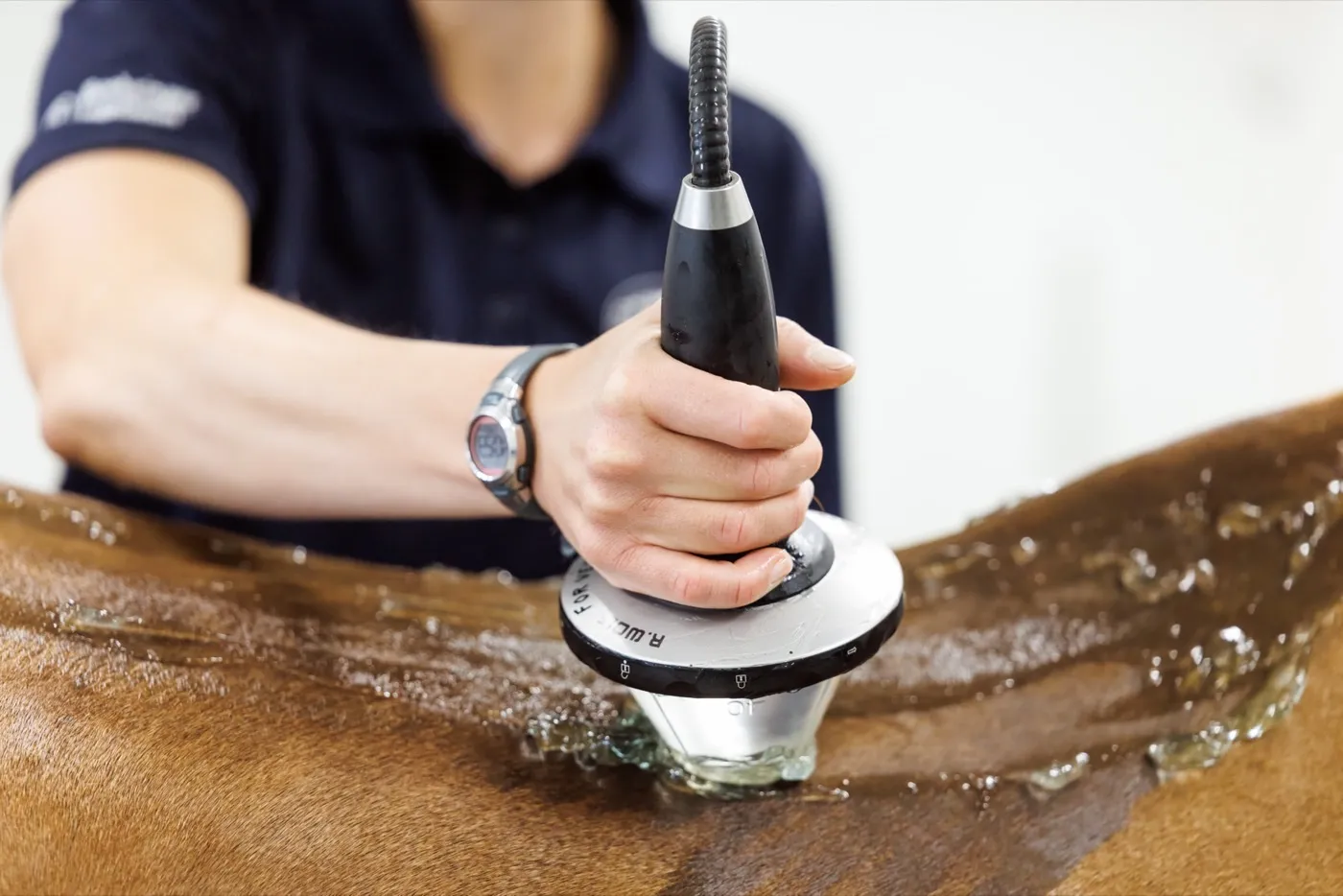
Before we recommend shockwave, we examine your horse and use diagnostics such as ultrasound or radiographs to confirm the problem. On treatment day, your horse may be lightly sedated to help them stand quietly. We apply coupling gel to the skin and hold the applicator over the injured area for a few minutes while it delivers pulses of sound waves.
Most horses need a short series of treatments spaced a few weeks apart. We will give you an exercise plan to follow between sessions and let you know when your horse can safely return to work or competition.
Could shockwave help your horse?
Shockwave may be worth considering if your horse has:
- A suspensory ligament or tendon injury that is slow to heal
- Arthritis, including in the hocks
- Back or muscle soreness that affects performance
- A chronic orthopedic problem that has not responded fully to other care
Shockwave usually works best as part of a broader plan that includes controlled exercise, rehabilitation and, when appropriate, other therapies. We will help you decide whether it is a good fit for your horse.
Talk with us about shockwave therapy
If your horse is dealing with a nagging injury or chronic soreness, call us at (952) 435-8387 to schedule an evaluation.
Shockwave Therapy - FAQ
Is shockwave therapy safe for every horse?
Shockwave should only be given by a licensed veterinarian who has examined your horse. It should not be used over tumors, in horses with bleeding disorders or on blood thinners, in pregnant mares, or over the growth plates of young horses. Side effects are usually mild and short lived, such as brief soreness, skin redness or bruising. Source: American Association of Equine Practitioners
How many shockwave treatments will my horse need?
A typical protocol is three sessions given about three weeks apart, though the interval can be shorter for some acute tendon and ligament injuries. Each application takes only a few minutes, usually with mild sedation. Because shockwave temporarily dulls sensation in the treated area, many competition jurisdictions bar horses from competing for about 7 to 14 days afterward, so check your organization’s rules. Source: NIH PubMed Central
Can shockwave help my horse’s hock arthritis?
It can be one part of the plan. For arthritis in the lower hock joints, the goal is to relieve pain so the horse can stay in work. Shockwave therapy is one of several conservative options, alongside anti-inflammatory medication, joint injections, corrective trimming and shoeing, and adjustments to the exercise program. Source: Merck Veterinary Manual
How strong is the evidence for shockwave therapy?
Research in horses is still growing. A systematic review found the overall evidence limited, with the most promising results for ligament injuries, osteoarthritis, wound healing and short-term pain relief. That is why we use shockwave as one part of a plan built on an accurate diagnosis, controlled exercise and follow-up exams rather than as a stand-alone fix. Source: NIH PubMed Central
Is shockwave used alone for suspensory injuries?
Usually not. Suspensory injuries are commonly managed with rest and a controlled exercise program, and shockwave is often added for chronic or slow-healing cases. Regenerative therapies and anti-inflammatory medication may also be part of the plan. Recovery can take six months or more, and ultrasound rechecks help guide the return to work. Source: Merck Veterinary Manual


