Equine sports medicine at Cleary Lake
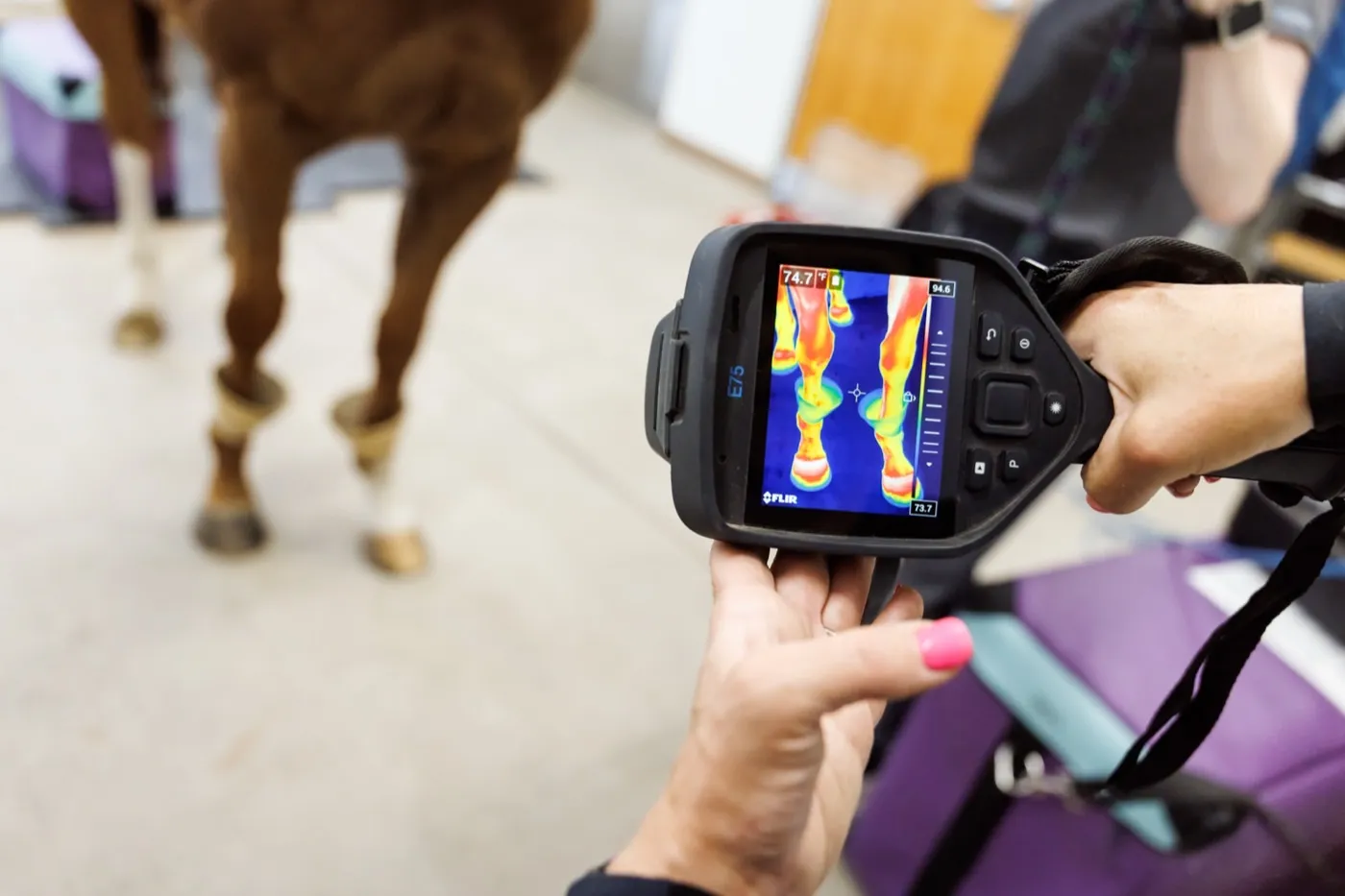
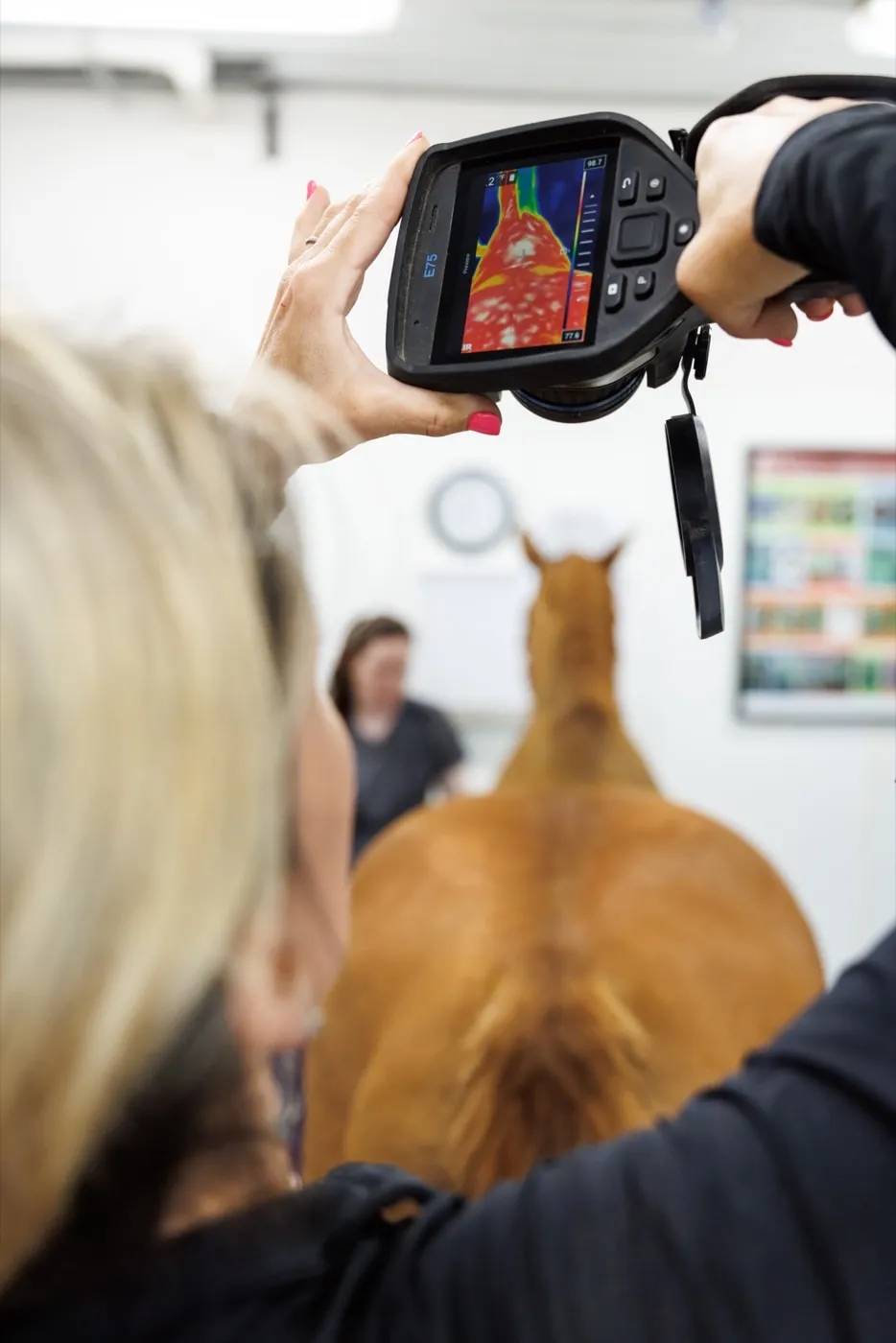
Equine Sports Medicine at Cleary Lake Veterinary Hospital focuses on keeping horses healthy, comfortable, and performing at their best. Our veterinarians evaluate lameness, musculoskeletal conditions, performance concerns, and injuries using comprehensive examinations and advanced diagnostic tools. Services may include joint injections, thermography (infrared thermal imaging that detects changes in surface temperature that may indicate areas of inflammation or abnormal blood flow), and gait and movement evaluation using the Sleip App, a diagnostic technology that uses video and AI-assisted analysis to objectively assess a horse’s movement and help identify subtle gait asymmetries. We use these tools, along with a thorough physical and lameness examination, to develop individualized treatment and rehabilitation plans designed to reduce pain, support healing, and help horses safely return to their desired level of activity.
Equine joint injections are routinely performed at Cleary Lake Veterinary Hospital to help keep joints healthy. Numerous products can be used, including hyaluronate, polyacrylamide gels (such as Noltrex or Arthramid), natural cushions (such as Spryng), various steroids, and regenerative therapies (such as ProStride). Ultrasound or X-ray guidance is often used to facilitate accurate placement.
What to expect at your horse’s lameness or performance exam
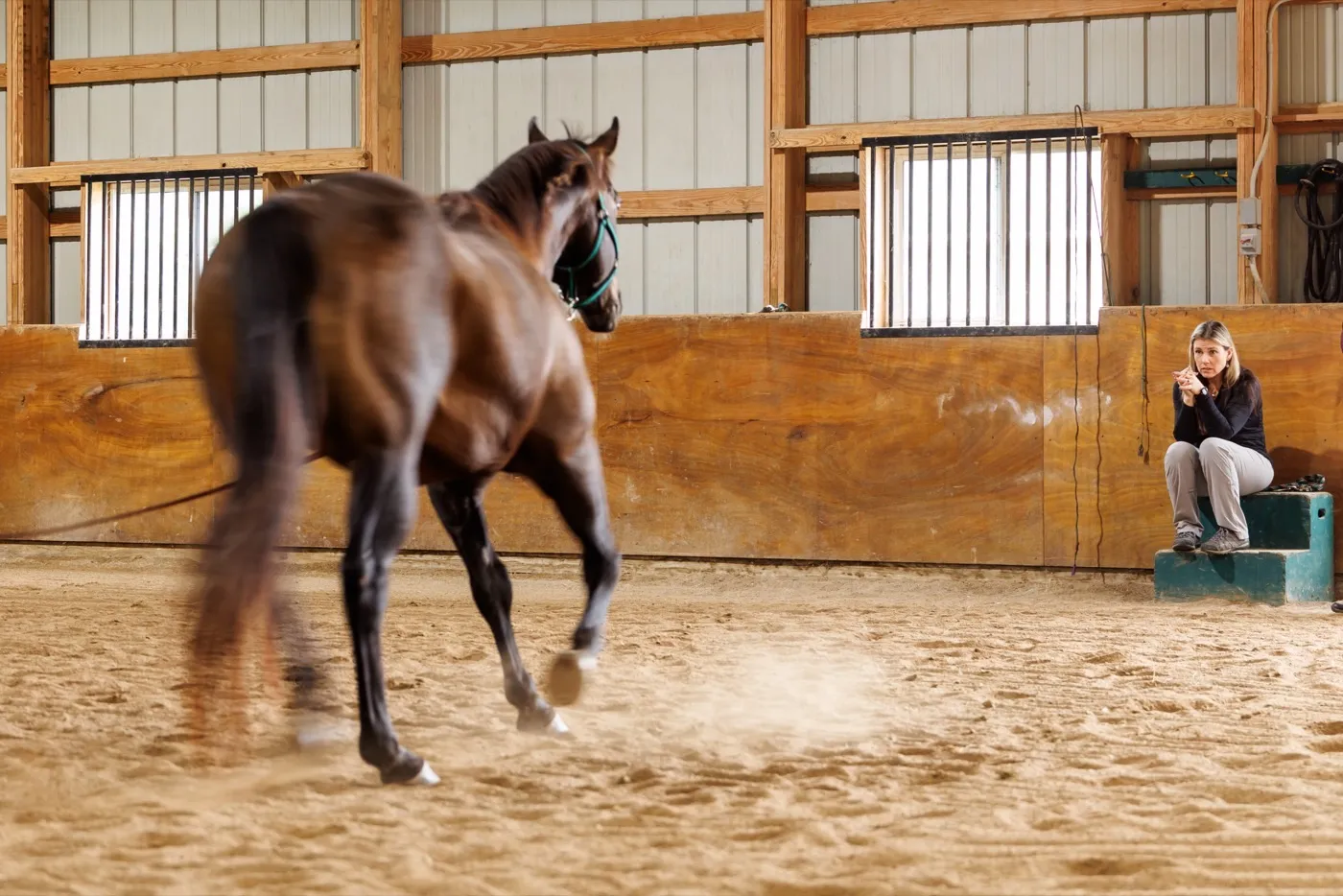
We begin by asking about your horse’s history, workload and the changes you have noticed. Next, we examine your horse standing, feel the legs, back and feet, and watch them move in a straight line and on a circle, sometimes under saddle in our indoor arena. Flexion tests, nerve blocks, Sleip gait analysis and thermography can help us narrow down the source of pain.
Once we find the problem area, imaging such as digital radiography or ultrasound helps confirm the cause. We then build a treatment and rehabilitation plan with you.
Does your horse need a sports medicine evaluation?
Sports medicine is not only for top competitors. Consider an evaluation if your horse:
- Is lame, short strided or uneven, even slightly
- Resists certain movements, leads or transitions
- Seems stiff, sore in the back or less willing to work
- Has had a drop in performance without an obvious reason
- Is coming back from an injury and needs a return-to-work plan
Catching small problems early often makes them easier to manage and helps keep your horse comfortable for years.
Schedule a lameness or performance evaluation
If something seems off with your horse’s movement or attitude under saddle, call us at (952) 435-8387 to book an exam.
Sports Medicine - FAQ
What happens during a lameness exam?
A lameness exam starts with your horse’s history, then a look at posture and symmetry while standing and a hands-on check of the legs, feet, back and neck. Your horse is watched at the walk and trot in a straight line and on a circle, and flexion tests may be done. Nerve blocks and imaging help narrow down the source of pain. Source: Merck Veterinary Manual
What are nerve blocks and why are they used?
A nerve block is an injection of local anesthetic that temporarily numbs a specific part of the leg. If your horse moves better after a block, the pain is likely coming from that area. Blocks usually start low on the leg and work upward, and lower limb blocks often take effect within about 10 minutes. This lets imaging focus on the right spot. Source: Merck Veterinary Manual
How can I tell if my horse is lame?
With front leg lameness, the most consistent sign is a head nod, where the head rises as the sore leg hits the ground. With hind leg lameness, the hip or pelvis rises when the sore leg lands. Heat, swelling or muscle loss can also be clues. Let us know about any pain medication given before the exam, because it can mask lameness. Source: Merck Veterinary Manual
What is the Sleip app?
Sleip is a gait analysis tool that uses smartphone video and computer vision to measure how evenly a horse moves. It reports asymmetry measurements that can reveal subtle lameness that is hard to see by eye, and it is designed to support, not replace, a veterinarian’s exam. Results can be saved and shared, which makes it easy to keep you in the loop. Source: Sleip
Which joint injection is best for my horse?
It depends on the joint, the stage of disease and your horse’s health and workload. Corticosteroids are the most commonly used joint anti-inflammatory, and other options include hyaluronan, polysulfated glycosaminoglycans and blood-derived products such as platelet-rich plasma and autologous protein solution. We will talk through the choices with you after examining your horse. Source: Merck Veterinary Manual


