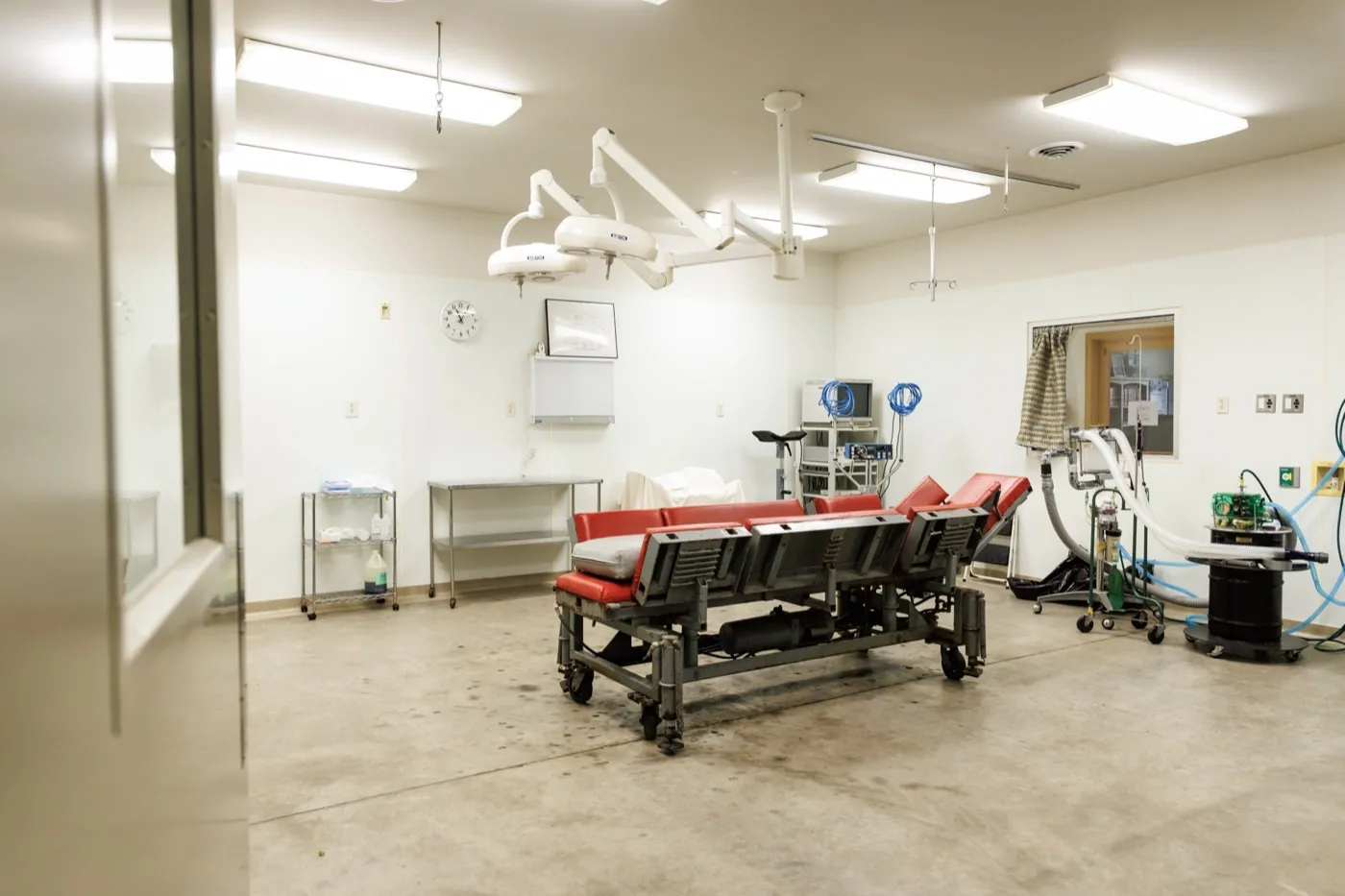
Equine surgery at Cleary Lake
Equine Surgery Services at Cleary Lake Veterinary Hospital include a variety of surgical procedures performed by our experienced veterinary team. Services include castrations, hernia repairs, eye enucleations, mass removals, and surgical repair of lacerations and wounds. Other surgical procedures may be performed on a case-by-case basis. Our team provides thorough pre-surgical evaluation, anesthesia and monitoring, pain management, and post-operative care to help ensure your horse receives safe and compassionate care throughout the surgical process.
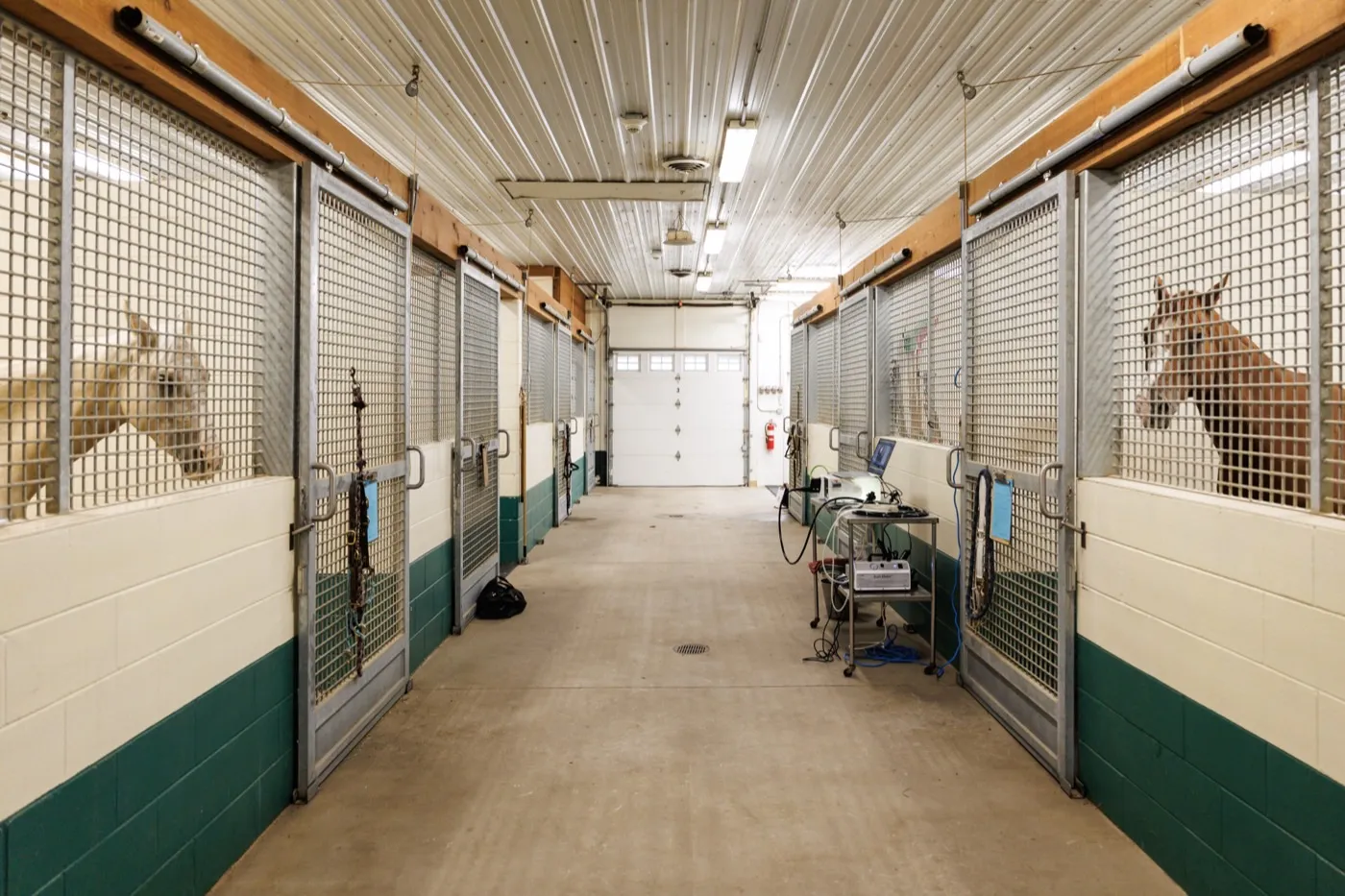
What to expect when your horse has surgery
Before any procedure, we examine your horse, may run pre-surgical bloodwork, and talk with you about the plan, the type of anesthesia and the expected recovery. Depending on the procedure and your horse, surgery may be done standing with sedation and local anesthetic, or under general anesthesia in our surgical suite.
During surgery, your horse is monitored closely and given pain relief. Afterward, horses can recover in our on-site equine hospital. Before you go home, we explain incision care, medications, exercise restrictions and the warning signs to watch for.
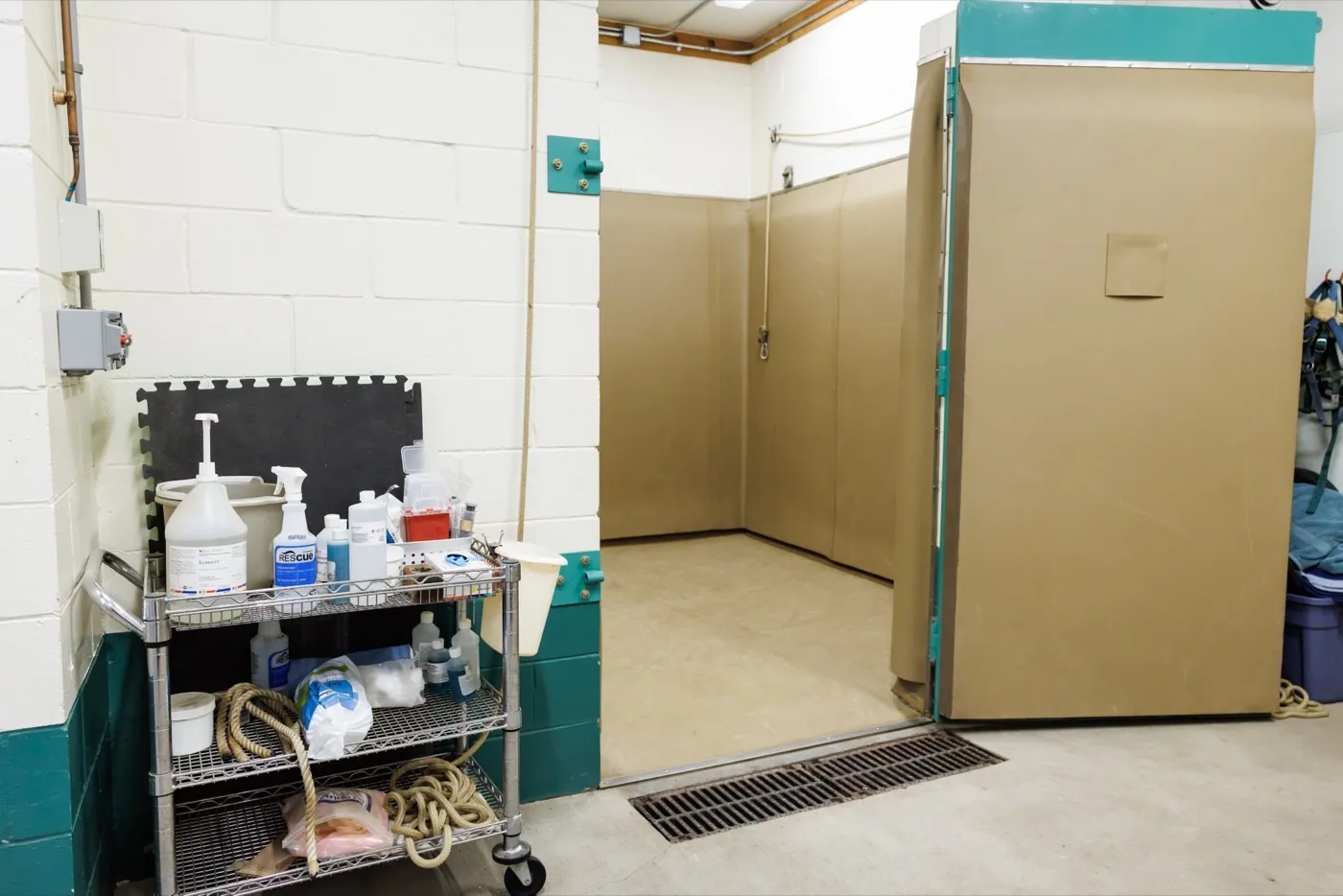
When your horse may need surgery
Some surgeries are planned, while others cannot wait. Common reasons horses come to us include:
- Castration of colts and stallions
- Hernias that need repair
- Painful or badly injured eyes that need to be removed
- Lumps and masses that should come off
- Cuts and wounds that need cleaning and closure
Wounds are best treated quickly. Because equine emergency service, including emergency surgery and critical care, is available 24 hours a day, 365 days a year, you can call us any time your horse is hurt.
Talk with us about your horse’s surgery
To schedule a procedure or ask whether surgery is the right option, call us at (952) 435-8387. For an injured horse, call any time, day or night.
Equine Surgery - FAQ
What should I expect after my horse is castrated?
Aftercare may include anti-inflammatory medication or antibiotics and keeping the incision clean. When incisions are left open to drain, light exercise is often recommended after a few days to limit swelling. Some swelling is common, but call right away for steady bleeding or tissue coming from the incision. Learned stallion behavior may take time to fade. Source: American College of Veterinary Surgeons
What if one of my colt’s testicles has not dropped?
This is called cryptorchidism. A retained testicle still produces male hormones, so the horse can keep acting like a stallion, and the condition is considered heritable. Locating the testicle may involve palpation, ultrasound or blood tests, and removal is a more involved surgery than a routine castration, often requiring a board-certified surgeon. Source: American College of Veterinary Surgeons
Does every cut on my horse need to be seen by a veterinarian?
It is best to call about any wound, because even a small puncture can be more serious than a large cut. Call right away for heavy bleeding, deep or dirty wounds, lameness, or any wound near a joint or tendon. Wounds on the lower legs heal more slowly and are prone to excess granulation tissue, often called proud flesh. Source: American College of Veterinary Surgeons
What should I do for a bleeding wound until the vet arrives?
Control bleeding first with firm, direct pressure, using an absorbent pad held in place with a bandage. Avoid walking a horse that will not bear weight on a leg, since an unstable limb should be stabilized before moving. Keep your horse as calm and quiet as possible, and call us right away so we can guide you. Source: Merck Veterinary Manual
Will my horse cope if an eye has to be removed?
Most horses do well with one eye. Removal is usually recommended for an eye that is chronically painful or severely damaged, when that pain is affecting the horse’s quality of life. In horses, the surgery can sometimes be done standing with sedation, avoiding general anesthesia. Source: American College of Veterinary Ophthalmologists


