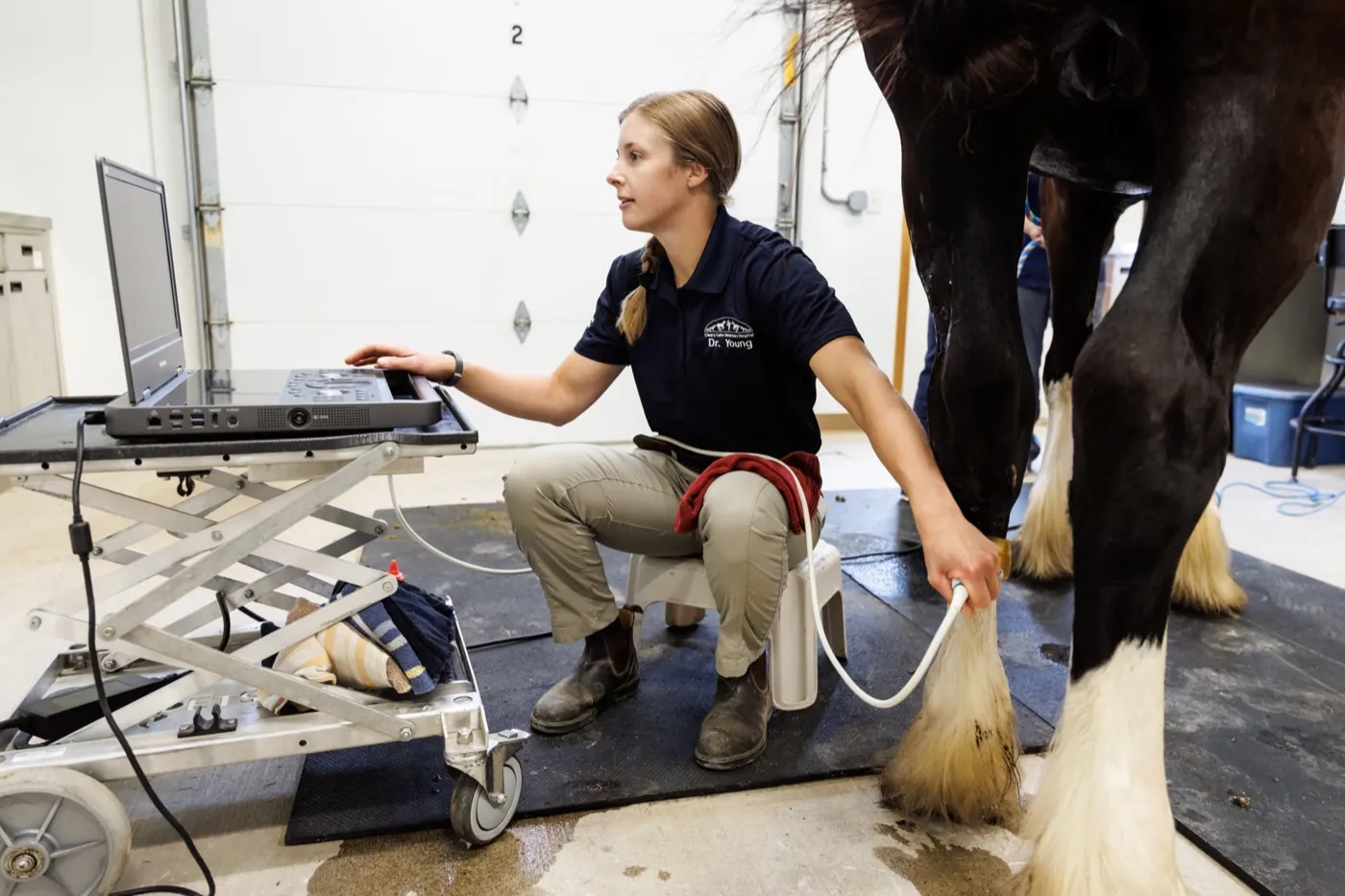
What is equine ultrasonography?
Equine Ultrasonography at Cleary Lake Veterinary Hospital is a non-invasive diagnostic tool that uses sound waves to create detailed images of internal organs, soft tissues such as tendons and ligaments, and reproductive structures. Ultrasound services are available to evaluate tendon and ligament injuries, muscle and other soft tissue conditions, abdominal organs, lungs and reproductive health. It is an important tool in evaluating equine lameness and systemic health, helping our veterinarians identify injuries or sickness, and monitor healing and response to treatment.
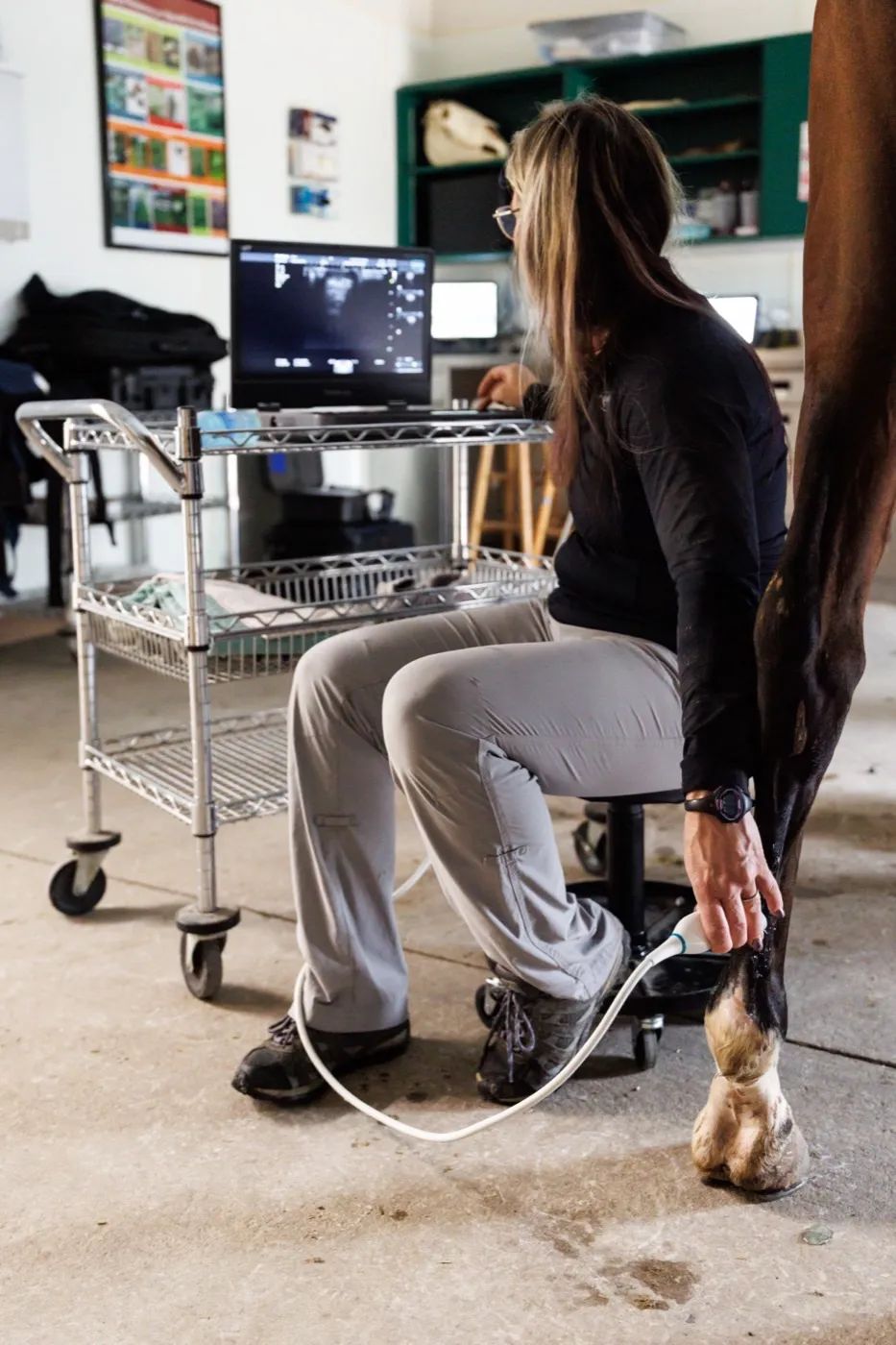
What to expect during your horse’s ultrasound
Most ultrasound exams are quick and painless. Depending on the area being scanned, we may clip the hair and apply gel or alcohol so the probe makes good contact with the skin. Some horses are given light sedation to help them stand still, which gives us clearer images.
The pictures appear on the screen in real time, so we can often show you what we are seeing and talk through the results during the visit. For injuries, follow-up scans at recheck visits show us how well the tissue is healing.
When might your horse need an ultrasound?
Ultrasound helps answer questions about many parts of the body. We may recommend it if your horse:
- Has swelling, heat or lameness that points to a tendon or ligament injury
- Is showing signs of colic or other abdominal pain
- Has a fever, cough or breathing changes that may involve the lungs
- Is a mare being prepared for breeding or checked for pregnancy
- Is recovering from an injury and needs healing tracked over time
Ultrasound is often paired with digital radiography for a more complete picture.
Schedule an ultrasound for your horse
If your horse has a new swelling, lameness or another concern, call us at (952) 435-8387 and we will help you decide whether ultrasound is the right next step.
Equine Ultrasonography - FAQ
What can an ultrasound show in my horse?
Ultrasound is used routinely to help diagnose problems such as colic, pneumonia, heart disease and tendon or ligament injuries. It gives detailed views of soft tissues and the surfaces of bones and joints, and it can also guide needles for joint injections or for placing regenerative treatments directly into an injured tendon or ligament. Source: Cornell University College of Veterinary Medicine
Is ultrasound useful when my horse has colic?
Yes. Ultrasound of the abdomen is recommended for horses with sudden or long-term abdominal pain, as well as for fever without a clear cause, poor appetite, diarrhea from colitis and weight loss. It lets your veterinarian look at the intestines and other abdominal organs without surgery and helps guide treatment decisions. Source: Merck Veterinary Manual
Why use ultrasound instead of X-rays for a tendon injury?
Radiographs are best for bone, while tendons and ligaments are soft tissues that show up much better on ultrasound. Ultrasound is the most commonly used and widely available tool for documenting tendon injuries in horses. It shows the size and location of the damage, which helps your veterinarian choose treatment and plan your horse’s rehabilitation. Source: Merck Veterinary Manual
How early can ultrasound detect pregnancy in my mare?
An embryo may first be seen on ultrasound about 9 to 10 days after ovulation. Many farms schedule the first check at 14 to 18 days to confirm pregnancy and look for twins, then recheck at 25 to 30 days, when a heartbeat should be visible, and again later in the pregnancy. Source: Merck Veterinary Manual
Why scan both legs when only one is injured?
Comparing the injured leg with the opposite leg helps your veterinarian judge what is normal for your horse, and some injuries, such as those of the suspensory ligament, can occur in both legs at once. Ultrasound is usually combined with a lameness exam, and in some cases radiographs or other imaging are added for a complete picture. Source: Merck Veterinary Manual


