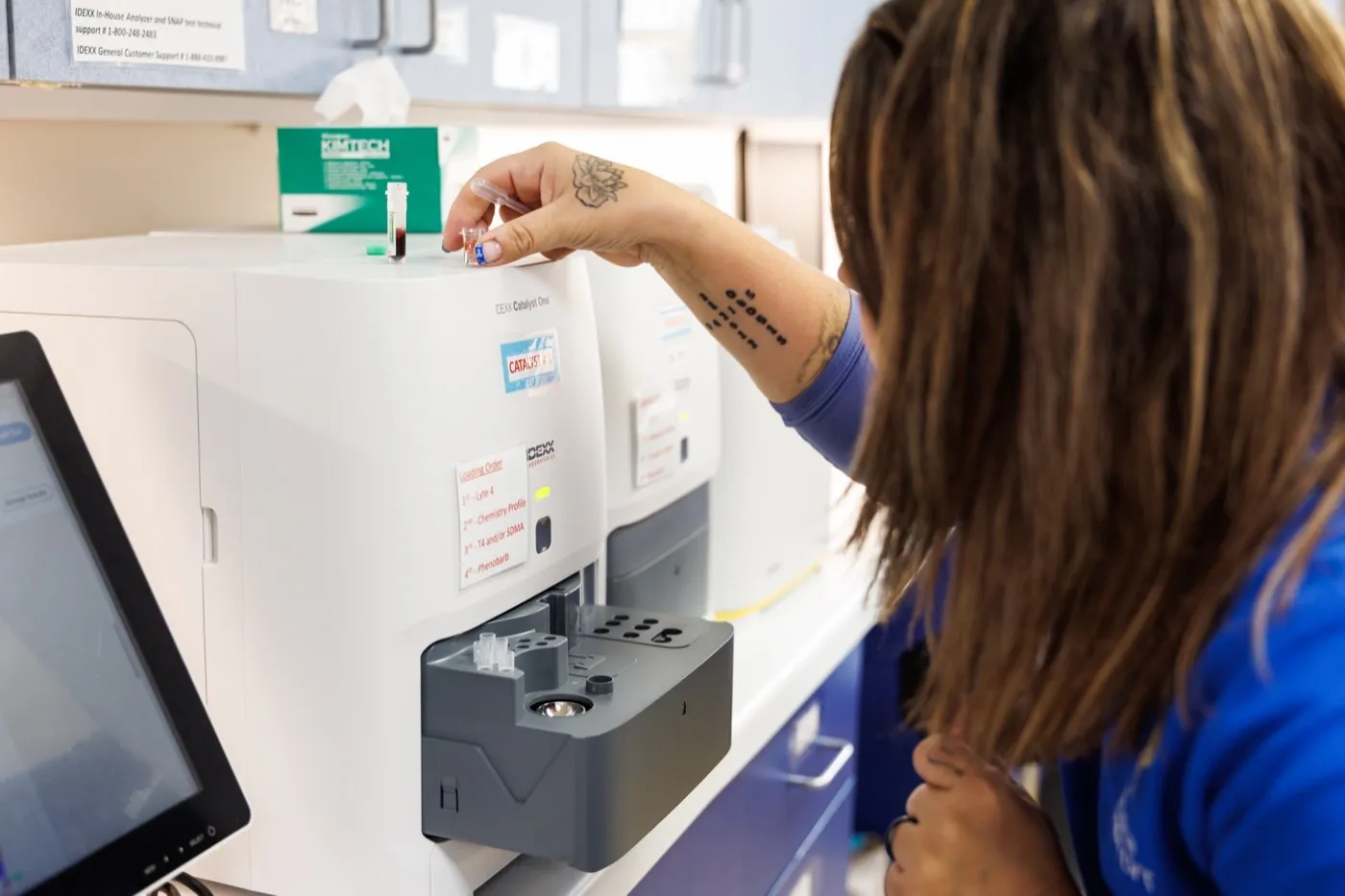
What our in-house laboratory means for your pet
At Cleary Lake Veterinary Hospital, we have a full in-house laboratory that allows our veterinary team to perform many important diagnostic tests right here in our hospital. Having an in-house laboratory provides faster results, which can help our veterinarians make timely decisions about your pet’s diagnosis and treatment. This is especially valuable when your pet is sick or requires urgent care, as we can often begin treatment without waiting for results from an outside laboratory. Our in-house testing capabilities also allow us to monitor ongoing conditions, evaluate pre-surgical bloodwork, and assess your pet’s response to treatment. By having these diagnostic resources readily available, we can provide efficient, convenient, and comprehensive care for your dog or cat.
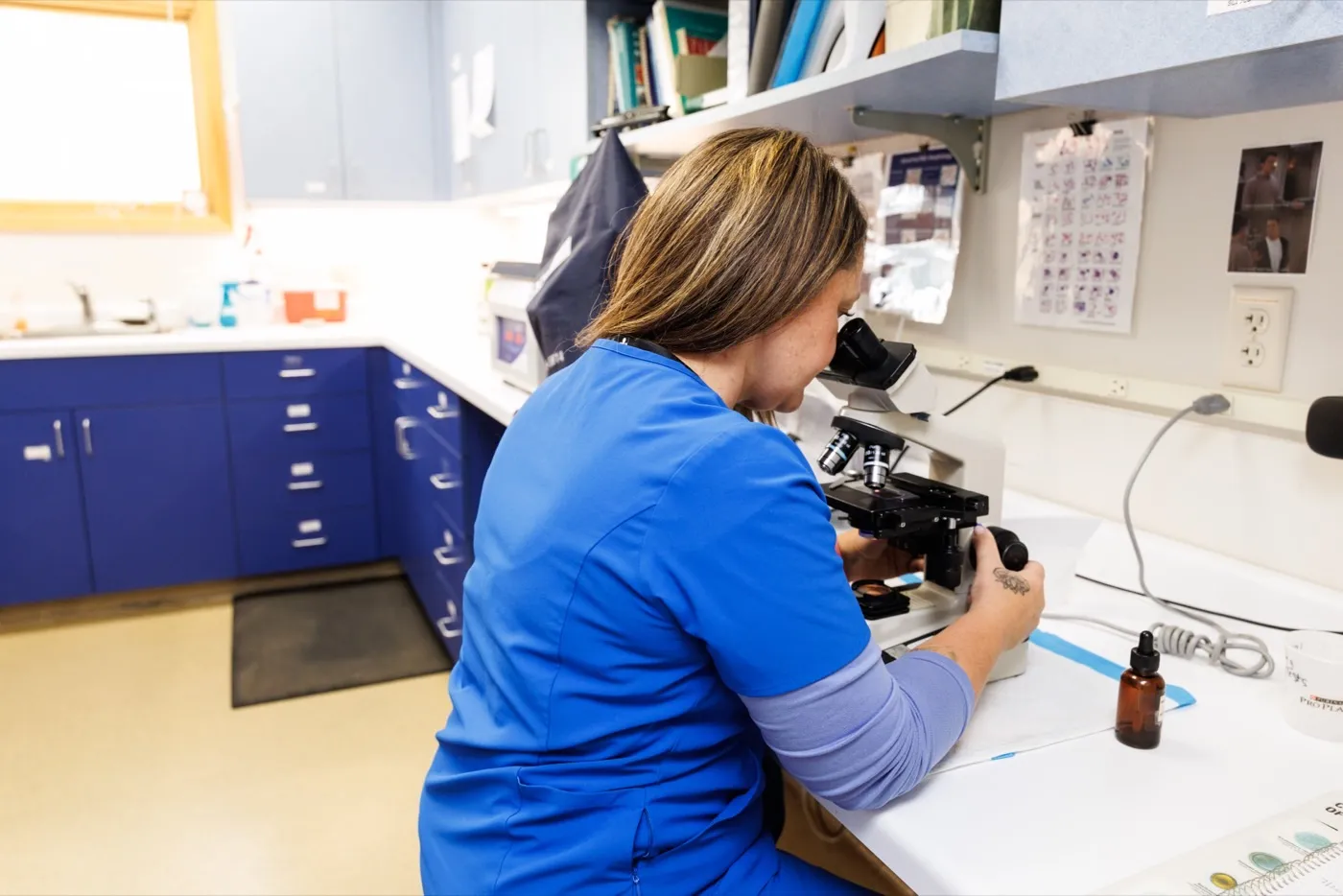
What to expect when your pet needs lab work
Depending on your pet’s needs, we may collect a small blood sample, a urine sample, a stool sample, or a sample from the skin or ears. Most samples are collected quickly during your visit, and our team handles your pet gently throughout.
Because many tests are run right here, results are often available while you wait or later the same day, and your veterinarian will walk you through what they mean. Some specialized tests are still sent to an outside laboratory, and we will let you know when to expect those results. If fasting is needed, we will tell you ahead of time.
When your dog or cat may need lab testing
Lab work gives us a look at what is happening inside your pet’s body. We may recommend testing when your pet:
- Is sick, such as vomiting, not eating or drinking more than usual
- Is scheduled for surgery, a dental procedure or anesthesia
- Is a senior and due for wellness screening
- Takes long-term medication or has an ongoing condition we are monitoring
- Needs a routine check for intestinal parasites
Testing healthy pets also gives us baseline values to compare with if they get sick later.
Questions about your pet’s lab work?
Whether your pet is due for screening or not feeling well, we are here to help. Call us at (952) 435-8387 to schedule a visit.
Full In-House Laboratory - FAQ
What does routine bloodwork check?
Two of the most common blood tests are a complete blood count and a chemistry panel. The blood count looks at red cells, white cells and platelets, which can point to anemia, infection or inflammation, or clotting problems. The chemistry panel shows how organs like the liver and kidneys are working and measures blood sugar and electrolytes. Source: Merck Veterinary Manual
How often should my senior cat have lab work?
Senior cats often benefit from more frequent checkups than younger cats. At least once a year, your veterinarian may suggest tests such as bloodwork, a urinalysis and a fecal exam to catch changes early. Cats with an ongoing medical condition may need testing more often. We will recommend a schedule that fits your cat. Source: Cornell Feline Health Center
Why does my veterinarian want a urine sample?
A urinalysis shows how well the kidneys are concentrating urine and checks for protein, blood cells and bacteria. Combined with bloodwork, it helps detect and stage kidney disease. Some newer blood markers can flag kidney changes earlier than older tests, and regular exams and bloodwork are recommended for all senior cats. Source: Cornell Feline Health Center
Why does my dog need a yearly fecal test?
Dogs can pick up intestinal parasites such as roundworms and hookworms, and some of these parasites can also infect people, especially children. A yearly fecal test helps find and treat them early. Yearly heartworm testing and year-round heartworm prevention are also recommended, and many heartworm products help control intestinal parasites too. Source: Merck Veterinary Manual
Why might my pet need more than one stool test?
Some parasites are not shed in every stool sample. Giardia cysts, for instance, are not passed continuously, so several samples may be needed to find them, and tapeworm eggs can be missed on a routine fecal exam. If your pet still has signs like diarrhea after a negative test, we may recommend repeating it. Source: Cornell Feline Health Center


