Eye care for dogs and cats at Cleary Lake
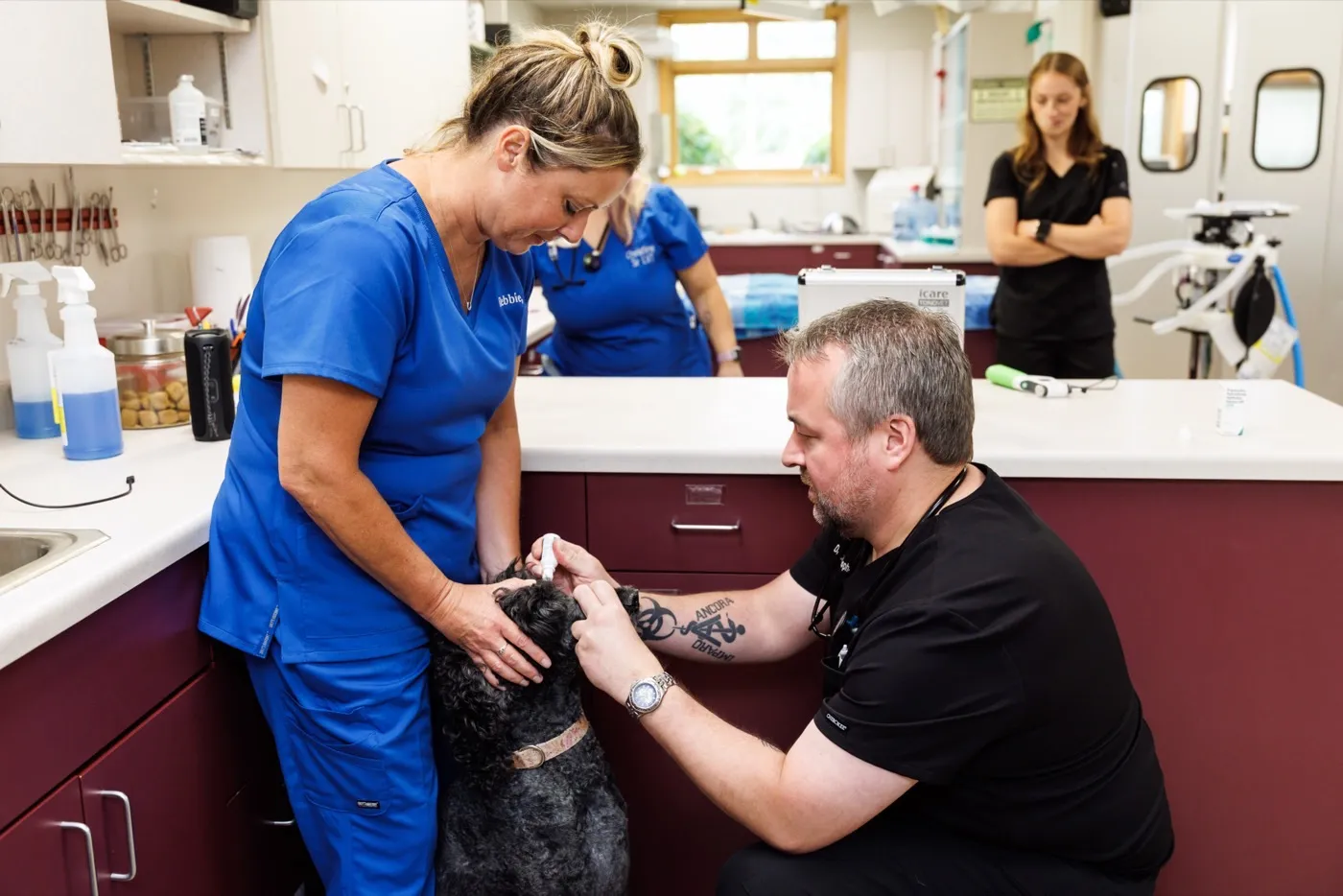
Our small animal ophthalmology services provide comprehensive care for eye conditions affecting dogs and cats. We evaluate and treat a variety of concerns, including eye infections, injuries, inflammation, cataracts, glaucoma, corneal conditions, and other vision-related problems. When specialized care is needed, we also work with board-certified veterinary ophthalmologist Dr. Andrew Rogen to provide advanced evaluation and treatment options for your pet’s eye health.
What to expect at your pet’s eye exam
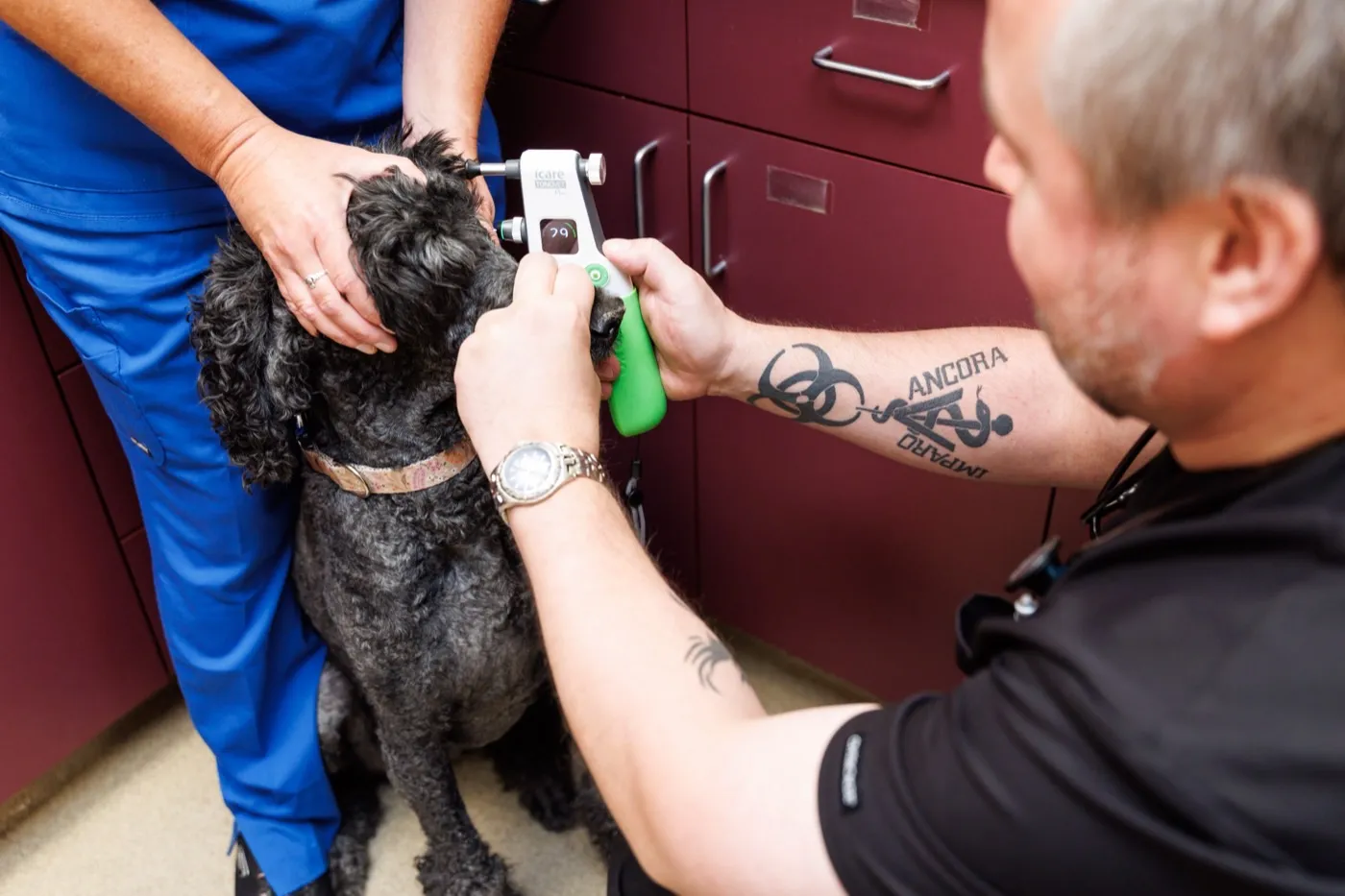
We begin by asking what you have noticed and when it started, then examine your pet’s eyes, eyelids and the area around them with a bright light and magnification. Depending on the concern, your veterinarian may use a special stain to check the surface of the eye for scratches or ulcers, measure tear production or check the pressure inside the eye.
Once we know what is going on, we will explain the treatment plan and how to give any eye medications at home. If your pet needs advanced care, we can arrange a referral to a veterinary ophthalmologist.
Signs your pet needs an eye exam
Eye problems can get worse quickly, so it is best not to wait. Call us if you notice:
- Squinting, holding an eye closed or pawing at the face
- Redness, tearing or discharge
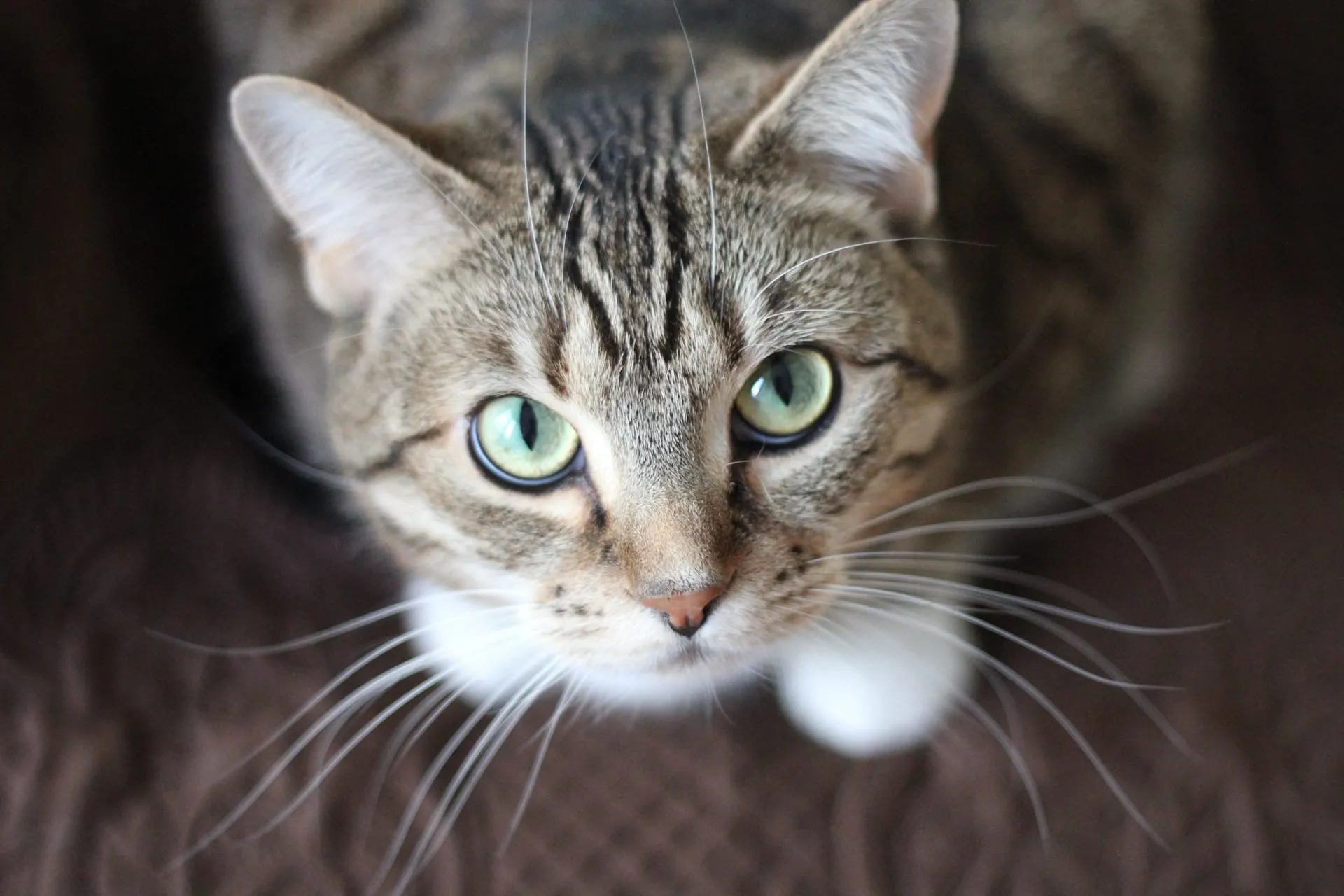
- A cloudy, bluish or hazy look to the eye
- An eye that looks larger than the other
- Bumping into things or other changes in vision
Some eye conditions, such as glaucoma and deep corneal ulcers, can threaten vision within a short time. Early care gives your pet the best chance of keeping a healthy, comfortable eye.
Worried about your pet’s eyes?
Call us at (952) 435-8387. During business hours, we offer same-day appointments for urgent concerns whenever possible.
Ophthalmology - FAQ
My pet is squinting. Is that an emergency?
Squinting often signals eye pain, and a common cause is a corneal ulcer, a wound on the clear surface of the eye. Other signs include redness, cloudiness, tearing and discharge. A special stain is used to find ulcers. Early treatment usually gives the best outcome, and very deep ulcers can rupture the eye, so please call us promptly. Source: American College of Veterinary Ophthalmologists
How is glaucoma diagnosed in dogs and cats?
Glaucoma is diagnosed by measuring the pressure inside the eye with an instrument called a tonometer, along with a full eye exam that includes the optic nerve. Signs can be vague, such as redness, cloudiness, tearing, an enlarged eye, pain or lethargy. High pressure can quickly cause permanent blindness, so prompt evaluation is essential. Source: American College of Veterinary Ophthalmologists
What are the signs of glaucoma in dogs?
Glaucoma can develop slowly and quietly or come on suddenly with severe pain, redness and vision loss. Early signs are subtle, such as a slightly enlarged pupil, mild redness of the white of the eye or a slightly enlarged eye. A dog showing any signs of glaucoma should be seen by a veterinarian immediately. Source: Merck Veterinary Manual
Can cataracts be treated with eye drops?
No medication has been proven to reverse, slow or prevent cataracts. Surgery is the only known treatment, and it often restores useful vision. Most cataracts in dogs are inherited, and diabetes is the most common related disease. A board-certified veterinary ophthalmologist can determine whether your pet is a good candidate for surgery. Source: American College of Veterinary Ophthalmologists
Why does my cat keep getting eye infections?
Recurring eye problems in cats are often caused by feline herpesvirus. After the first infection, flare-ups can return throughout life, especially during illness or stress. Signs include squinting, discharge, redness and sometimes corneal ulcers. Treatment may include antiviral medications, and steroid eye drops are generally avoided because they can make the infection worse. Source: American College of Veterinary Ophthalmologists


